Jun 11, 2012


Google have released a fabulous video to get us pumped up and excited for Project Glass: Google’s augmented reality glasses. To be honest, it’s worked on me. I want a pair of these right now!

Augmented reality is the concept of altering or overlaying what we see. If these glasses are one day released to the public, we could all be comfortably reading the news as we walk to work, or watching a video without having to tilt our heads down. It’s an amazing concept, and one that Google hope to formally demonstrate by the end of the year.

As well as the video, I have included a list of the features portrayed within it, as well as my speculation on how some of the features will be implemented.

How will they work? 


Babak Parviz (a member of the Project Glass team) has developed contact lenses with pixels in them. Presumably you wear one of these, and perhaps a Near Field Communication system built into the housing above your right eye (see images) sends the video signals wirelessly. If Project Glass does use a contact lense with pixels in it, it’ll make for an interesting start to each day!

Presumably there is a sensor/camera directed towards your eyeball to detect where you are looking, if the glasses respond to eye gestures. In the video, the wearer occasionally looks away from whatever is happening to use his glasses, so they may be motion triggered instead. Perhaps a combination of both. As for a camera which takes images of things in front of you, that can be seen clearly as the hole in the right-eye housing.


As for the audio, the images seen so far do not show any sort of earpiece attached to the glasses. Presumably there is a microphone on them somewhere, perhaps in the housing over the right-eye, but this means conversations would be difficult to keep private. Perhaps they will connect to a small Bluetooth headset?

Thinking of Bluetooth headsets made me realise that these glasses are incredibly thin with very little room for technology, let alone a battery. So how will they be powered?
The Video


It certainly has me excited! You? Unfortunately you never see the glasses themselves, but you certainly get an exciting taste as to what we can hope for.
Features shown in the video
Checking In

This is demonstrated by the wearer using head gestures and another form of control to check into the food truck he is standing by with his friend.
Video Calling

This is an amazing feature and a technical marvel. As well as transmitting video from his position, the wearer can see his girlfriend as a small image at the bottom of the screen. Remember this is probably all mocked up in a video editor, and the real image quality on the glasses may be considerably lower.
Calendar/Appointments

Perhaps the most useful feature of them all. I am constantly looking at my calendar to see what is coming up and how I should prepare myself. This feature would make me a very happy man.
Taking Photo/Sharing to Circles

The wearer finds a piece of graffiti art on a wall and takes a photo. Though he asks the glasses to do this for him, it has been reported that the glasses will also have a button for taking photographs. He then shares the image to ‘all my circles’ with a voice command.
Playing Music

Throughout the video music is played, and the viewer is led to think it is being played as background music for the video itself. Turns out that it was representing the ability to listen to music with these glasses, as the wearer gives the command ‘stop music’ before he answers a call from his girlfriend.
What do you think?

Do you want a pair of these glasses? Would you go to the trouble of wearing contact lenses with pixels in them? For that matter, would you be seen in public with them? They certainly have a very distinctive style which may not be for everyone. If these are released anytime soon, I will be fascinated to know the uptake rate.

Google Glasses are almost here!

By: Unknown on: Monday, June 11, 2012

Jun 7, 2012


Google has just announced that they plan to bring the full Offline functionality in its Google Maps app on Android over the next few weeks. Google would also like to bring these features to other other popular operating systems, WP7 and iOS, but there is nothing concrete on that.

The Maps android app by Google, that comes preloaded with each and every android phone, will be receiving an update for the offline mode. Users will be able to touch and hold on an area on the map, upon which they will get an option to download the whole of that area for offline access anytime anywhere, working up to street level.

Offline access is available in Google Maps app is at this moment too. You need to enable it under labs (settings) of Google Maps app. For that, open the Maps app, get your route or are o the screen that you wish to be cached, then go to the app’s settings » Labs » and select the ‘pre-cache map area’ checkbox. This will allow you to cache that area already on your map. Though, the update will bring detailed downloading for later uses too, naturally better than current caching technique, in terms of longevity and details.

The offline update will be launched in over 100 countries, over the next few weeks – no solid time frame was given, sadly. The offline feature would work on selected locations. Now what does that actually mean will be known only when you and us actually use it after the update.


Another cool addition is ‘highly-detailed 3D maps’ (see the pic above). It looks very impressive, and very clear and detailed. Even tress will pop out for you, it’s said. And how Google did it is even more interesting – at least to me. The company says they own a fleet of airplanes and have some on contract, with camera attached to them to enable them to take shots at no more than just 45 degree angle. Outright impressive, right?

Offline Google maps

By: Unknown on: Thursday, June 07, 2012

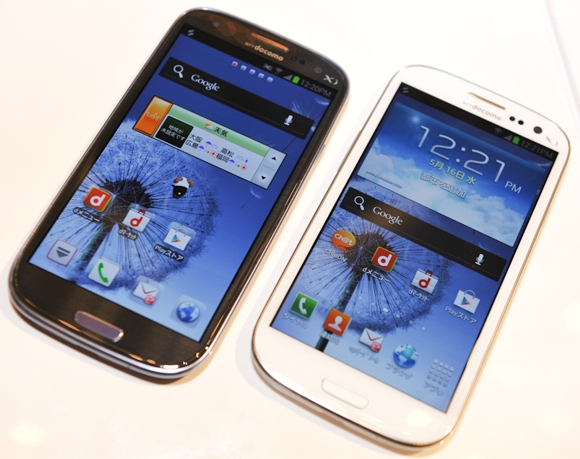
Japan seems to be getting the best version of the LTE-enabled Samsung Galaxy S3, as NTT DoCoMo has officially announced that the Galaxy S3 coming to their network in Japan will feature 2GB of RAM, along with a Snapdragon S4 dual-core processor. Couple the 2GB of RAM with the fact that the dual-core S4 is at par in most situations with the quad-core Exynos processor in the international Galaxy S3 when it comes to performance (apart from the graphics department), and you’ve a beast of a device in your hands.

Having the model number SC-06D, the Galaxy S3 for DoCoMo will come with support for their LTE network, and will be available in the colours white and blue (much like the international variant). Other major specs will remain unchanged, which include a 4.8-inch Super AMOLED HD display, 8 MP camera, Android 4.0 Ice Cream Sandwich, and a 2,100 mAh battery.

It might be that the US variants may also get 2GB of RAM, but nothing is certain at this point, so only time will tell. Though those that are not in the US or Japan will have to settle for the quad-core Exynos 4 Quad processor and 1GB of RAM, which is still a damn good deal.

Galaxy S3 Special Edition (Only for Japan with 2GB RAM)

By: Unknown on: Thursday, June 07, 2012

Jun 6, 2012


You've heard the AMOLED term a bunch of times when looking for more information about a certain smartphone (especially an Android-powered one) or when actually talking with the in-store carrier representatives about the characteristics that differentiate various mobile devices between them.

Whether you already know what AMOLED is or not, I'm going to thoroughly explain it for you, so next time you buy a mobile device and somebody tells you it’s got an AMOLED screen of some sort, you know exactly what they’re talking about.


What is AMOLED?

AMOLED is a display technology used in some of the most popular mobile devices available today, including various Android handsets and tablets that you see featured on my blog on a regular basis. AMOLED stands for “active-matrix organic light-emitting diode” – a rather complex term that you don’t have to remember as long as you know how it works.

The technology, especially used in Samsung-made Android devices, is very popular among Android device makers, although not everyone in the mobile game can use it as they please. Because Samsung is one of the main AMOLED panel makers, I'm not surprised to see the displays used especially in Samsung devices, with its direct competition (HTC, Motorola and others) having to sometimes wait for longer periods of time to get their AMOLED supplies, and even to replace AMOLED panels with different screen technology altogether.
How do AMOLED displays work?

OLED-Displays bests describes how AMOLED displays work:

Active matrix (AM) OLED displays stack cathode, organic, and anode layers on top of another layer – or substrate – that contains circuitry. The pixels are defined by the deposition of the organic material in a continuous, discrete “dot” pattern. Each pixel is activated directly: A corresponding circuit delivers voltage to the cathode and anode materials, stimulating the middle organic layer. AMOLED pixels turn on and off more than three times faster than the speed of conventional motion picture film – making these displays ideal for fluid, full-motion video.

What you should remember is that AMOLED displays will offer a great viewing experience, whether we’re talking about videos, games or pictures. The image is superior, in some cases, than the one experienced on devices using different screen technology, and it offers a better performance in direct sunlight (again, in some cases.)


Samsung Galaxy S III with Super AMOLED Display

Also worth mentioning is that AMOLED display offer faster response time, higher refresh rates, are more and more power-efficient (especially more advanced variants,) a major feature when it comes to mobile device use. Less power consumption means that smartphone and tablet makers can offer a better image without affecting battery life, especially in a mobile environment that’s getting ready for 4G LTE technology, another power devourer for mobile devices.


AMOLED: Super, HD, Plus & others

Naturally, the AMOLED development is going forward, with various companies further experimenting ways of taking advantage of the technology in future devices. Therefore, you shouldn’t be surprised to hear various other terms used in conjunction with AMOLED. These include: Super AMOLED, Super AMOLED Plus, Super AMOLED Advanced and HD AMOLED Plus. Such displays are found in various Android handsets and tablets available in stores right now. Here’s what it all means:

Super AMOLED is what Samsung calls its own AMOLED display technology because the display actually includes a digitizer (the component of the screen that detects touch). Super AMOLED screens offer a much better viewing experience in sunlight conditions and it is found in some popular devices including: Samsung Galaxy S, Google Nexus S, Samsung Focus and Samsung Omnia W.

Motorola Droid RAZR with Super AMOLED Advanced Display

Super AMOLED Plus is another display-related term marketed by Samsung. In comparison to AMOLED and Super AMOLED displays, the Super AMOLED Plus displays are even more energy efficient and brighter. You’ll certainly recognize some of the Android devices that employ such panels: Samsung Galaxy S II, Samsung Droid Charge and Samsung Infuse 4G.

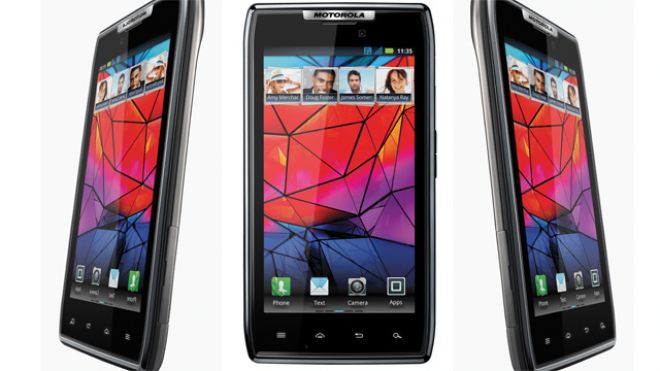
Super AMOLED Advanced is a term marketed by Motorola that’s supposed to described a brighter display than Super AMOLED screens, but also a higher resolution – qHD or 960 x 540 for Super AMOLED Advanced compared to WVGA or 800 x 480 for Super AMOLED. This display equips the Motorola Droid RAZR.

Samsung Galaxy Note with HD Super AMOLED Display

Finally, HD Super AMOLED describes those mobile panels that offer a higher (HD) resolution, typically 1280 x 720 pixels or even higher. The following devices have such panels on board: Samsung Galaxy Note, Samsung Galaxy Note, Samsung Galaxy S III and Samsung Galaxy Tab 7.7 (technically, the tablet comes with a superior HD Super AMOLED Plus display).
Which AMOLED display type is best for me?

When it comes to choosing your next smartphone, the size of the display and the technology behind it can be pretty important, although these are not the only factors you should be interested in when purchasing the device – other things to consider include processor speed, 3G/4G support, OS version and upgradeability, battery life, compatibility with worldwide carriers and even camera(s) performance.

But when it comes to choosing between the different AMOLED displays mentioned above, you’ll need a deeper understanding of how these display work and how they could better suit your needs. 

Are you looking for finer images? 

Do you plan to use the device out in the open a lot? 

Are you constantly streaming videos and using graphics-rich apps and games? 

These are things you should think about when choosing an AMOLED display type.

In other words, there isn’t necessarily a best one, but if you were to choose a device by the kind of AMOLED display it comes with, then you’d better get a Super AMOLED Plus or HD Super AMOLED screen. These are the kind of panels that you’ll find in the latest Android handsets from Samsung, therefore the devices that equip such panels will certainly meet your needs when it comes to CPU performance, connectivity choices or OS version.

The Super AMOLED Plus panel has an increased number of subpixels, which means the image is crispier, close to Retina Display – but not necessarily, as a higher resolution is also needed to achieve such performance. The HD Super AMOLED display sacrifices sharpness in favor of a HD resolution. This is achieved by using the PenTile technology that’s also found in regular Super AMOLED screens, which uses fewer subpixels to achieve larger resolutions.

PenTile explained

PenTile or PenTile Matrix is a technology that refers to subpixel arrangement in AMOLED displays. PenTile screens have a RGBG (Red-Green-Blue-Green) pixel layout – see image below – compared to regular displays that rely on an RGB-RGB pattern. The advantage is that PenTile displays can offer a higher resolution utilizing less pixels, but the disadvantage is that image is not as sharp as you’d expect it to be exactly because less pixels are involved.

RGB-RGB Display (left) vs RGBG PenTile Display (right)

Of the AMOLED variants mentioned above, only the Super AMOLED Plus displays offer an RGB-RGB arrangement, and therefore are capable of offering a crisper image.
Other mobile display kinds

While AMOLED displays are mostly used by Samsung in their Android and Windows Phone devices, you are going to find various AMOLED panels in various mobile gadgets, from smartphones and tablets to PMPs, gaming consoles and digital cameras.

But since we’re focusing on Android devices over here, we’ll note that the competition can use other display technologies marketed under different monikers such as Retina Display (Apple) or SLCD (Sony, Samsung, HTC, others).

Other uses

AMOLED displays are currently used in mobile devices although we’re expecting the companies involved to continuously develop the technology to include it in bigger devices (namely HDTVs) once larger AMOLED panels become more budget-friendly. Samsung also happens to have a 40-inch AMOLED TV prototype seen in the following image:

Samsung 40-inch AMOLED TV protoype

A recent iSuppli study revealed the challenges encountered by companies interested in mass-producing AMOLED TVs and suggested that only a few thousand such television sets will be sold this year, with production expected to increase gradually over the next couple of years. The following comparison chart shows the differences between AMOLED TVs and TV sets using other technologies, both when it comes to certain specs and features but also when it comes to prices:

AMOLED TVs vs LCD TVs – via iSuppli

While we wait for AMOLED TVs to be mass produced, we’ll certainly see more and more smartphones and tablets ship with AMOLED displays on board, which we’ll certainly cover thoroughly for you here on The Mythical Truth.

AMOLED screens... from A to Z

By: Unknown on: Wednesday, June 06, 2012

May 30, 2012


Google has released its new cloud service, Google Drive, and so far it doesn't look like it's going to blow any of its competition out of the water.

Like other Web-based cloud syncing and sharing apps such as Dropbox and Box, Google Drive enables users to share and update many types of files, from photos to documents. And it does so across PCs, Macs and mobile devices, though iPhones are not quite yet supported. Download the app, place the content to be sunk in it, and material is kept up to date across all tools.

Here are my first-blush opinions on Google Drive: 

Google Drive is basically Google Docs on steroids.
Google Drive gives users 5G of free storage and can definitely bulk up the storage, syncing and backup options for businesses already using a Google Apps account. Documents, photos, presentations -- just about any file type can be shared. Depending on a business' needs, usage can be expanded to 25GB for about $2.50 a month, all the way up to 16 terabytes for $799 per month. That is far more than most companies need.

Billing is managed through a firm's existing Google Apps relationship, making it a quick and easy way to add cloud-based storage when needed.

There are promising business features, but also some limitations. 

As should be expected, Google Drive's search functions are excellent. Also, users can do away with bulky email attachments by sharing files through Google Drive.

The tool also adds offline work features. For people who prefer using software that runs on a local computer, such as Microsoft Word, Google Drive can automatically sync the current version of a document so it's updated in the cloud each time it is saved.

But deployment can be a headache. Enabling Google Drive for existing Google Apps users takes numerous manipulations of the account control panels. Some files need to be migrated. Employees need to be trained.

The migration is most definitely not plug-and-play.

Overall, businesses should find Google Drive to be a feature-rich option for backing up and syncing business files. But for most businesses, there is no reason to abandon other solutions for it.

What are your initial thoughts on Google's new cloud service? Let me know in the comments section below.

Google Drive... Meeeh

By: Unknown on: Wednesday, May 30, 2012
Yesterday's tech news was largely dominated by Android, and given the successor to the biggest selling Android device to date is launching across much of Europe and the Middle East, it shouldn’t come as too much of a surprise. In conjunction with the big launch of the Samsung Galaxy S III, the Korean LCD specialist is also (re)introducing its Music Hub app, which has been massively revamped in order to be taken seriously as a competitor to the popular services like iTunes and Spotify.

For £9.99 (UK) or €9.99 throughout Europe, the premium subscription services allows you to stream music from an extensive library exceeding 19 million tracks via a web browser or up to five authorized devices. Samsung has clearly been doing its homework on rivaling services, and as well as 100GB of cloud storage, Music Hub also offers custom radio stations or the ability for you to upload your own music using scan-and-match – Samsung’s take on Apple’s iTunes Match service launched late last year.


The service is built upon the technologies of Samsung’s recent acquisition mSpot, while 7 Digital takes care of providing the large catalog of tunes. Having surpassed Apple to become the number one smartphone manufacturer, Samsung is looking to deal more misery on its Cupertino-based rival, and although the Korean outfit hasn’t placed much emphasis on content hitherto, that is quite clearly changing.

Although Music Hub has been launched to purposely coincide with the launch of the Galaxy S III, it will offer compatibility with a number of older devices, including the Galaxy S II and Galaxy Note, as well as Samsung’s Smart TV range amongst others.

As you would expect, it will be a native part of all future smartphones, and there will be a browser-based media player allowing Music Hub to be enjoyed at anytime, in any place, and from any device. An iOS app is being prepared, although that will surely be a difficult area to master – especially given Apple’s stance on selling similar-to-iTunes content.


Amazon et al hit a brick wall trying to sell books through iOS apps, and given the smoothness in which iTunes works with Apple’s ecosystem, it’s going to be extremely hard for Samsung to infiltrate.

Samsung (Re)Launches Music Hub App

By: Unknown on: Wednesday, May 30, 2012

May 26, 2012

Facebook’s IPO just a week ago has been surrounded by controversy ever since, with the consensus being that the social network was grossly over-valued, while CEO Mark Zuckerberg has also been accused of not being wholly transparent with the numbers.

Despite the mini-saga post IPO, reports suggest Facebook is already gearing up for its next major acquisition. Having only last month purchased Instagram for a billion dollars, trusted sources of Pocket-lint suggest the company is poised to buy out the Opera browser for its own.

Given Facebook’s prowess on the web – second only to Google as the most visited domain – the move makes a great deal of sense, and the browser would certainly provide the optimal experience for the 900 million (and counting) strong army of Facebook users. Moreover, it would allow Facebook to compete with some of the other prominent tech companies – joining the ranks of Apple and Google – both of whom have their own, very popular browsers.


Having used Opera Mini on both Android and iOS, the mobile app is fairly well suited to Zuck’s social company. Why? Well, for lack of a more eloquent phrase, it sucks – just like most of Facebook’s mobile apps continue to do. Still, with 168 million consumers using the Mini version – as well as 270 million using the desktop iteration, it provides a decent springboard for Facebook to get its foot in the door in the browser wars.

Opera – while not as prominent as the likes of Chrome, Firefox and Internet Explorer, has a decent enough following to cause a stir – especially with the Facebook gravy train behind it. Building a new browser from scratch would make little sense from Facebook’s point of view, since the first year on the stock market will be a crucial one, and the quicker the company can be monetized from all angles, the better.


Neither Facebook nor Opera were in the mood to pass comment on the matter, and it’s likely we’ll only learn of a deal once it has been done.

Facebook Is About to Acquire Opera And Create Its Own Browser (RUMOR)

By: Unknown on: Saturday, May 26, 2012

May 25, 2012

Google CEO Larry Page has just announced that the company has at last completed its acquisition of Motorola Mobility, which has been in the works for around 9 months now. Originally announced in August of last year, Google had plenty of regulatory approval hurdles in its way before it could finalize the move; but with the approval of the acquisition coming from China a few days ago, the company was finally able to seal the deal. Motorola Mobility has now been acquired by Google for $12.5 billion, meaning that the company paid $40 per share.


So, now that the deal has been closed, what’s happening now? Well, effective immediately, Motorola Mobility is no longer trading on the NYSE. Sanjay Jha – credited by Page as someone who made a big bet on Android early on – has stepped down, with Google employee Dennis Woodside taking over as the new CEO. Page praised his work at Google, stating that he had worked throughout the Middle East, Africa, Eastern Europe, and Russia to expand Google’s business there. He also more recently helped to grow revenue in the U.S. from $10.8 billion to $17.5 billion.

Now, I wonder what’s in store for the company in the coming months and years, though; there have been rumors of post-acquisition layoffs, as Google trims down the company down to something that it would like to work with.

They certainly seem pretty enthusiastic about the acquisition, with Page remarking back in August that this move will help to supercharge the Android ecosystem (reassuring everyone, however, that this doesn’t mean that Google will stop working with other Android hardware manufacturers.) But what was the point of shelling out $12.5 billion to acquire a mobile hardware manufacturer for a platform that Google licenses out to everyone anyways? Considering that Google has been a victim of patent wars fought by Apple and Microsoft, the company did state that they wanted Motorola Mobility’s established repository of patents to defend Android against litigation from competitors’ “anti-competitive” litigation.


Thus, Google felt that this acquisition was actually a pro-competitive move to help defend its platform against all of the recent litigation. Google’s relationship with Motorola Mobility moving forward versus that with other manufacturers should be interesting to see as well, on top of what public perception of that relationship will be. Microsoft and Nokia are two very close companies, and some already regard them as the best manufacturer to go with when it comes to Windows Phone partially for that reason.

Yup, Google has acquired Motorola Mobility

By: Unknown on: Friday, May 25, 2012

May 21, 2012

Today sees something of an oddity, for two high-powered CEOs and an army of legal help will sit down and try to thrash out an end to one of the longest, most tedious legal battles we can think of. There may be blood! 

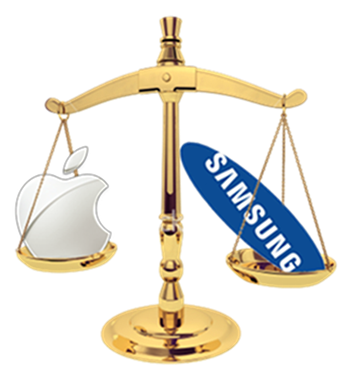
Some stories just won’t die, especially rumors of products that may or may not be on the cards. Some stories just won’t die because two technology giants refuse to act like grownups and stop bickering over who is infringing upon who’s patents, and whether you can have two icons that look identical but are actually different. 

Can you guess which one we are going to be talking about today? We bet you can! 


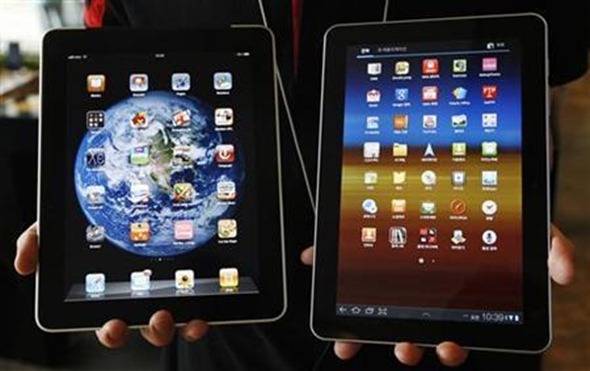
Today sees the latest installment in the ongoing saga that has seen Apple and Samsung take a patent-based legal battle to all four corners of the globe. Both parties believe that the other is in the wrong on multiple counts, whilst they both stand by their belief that they have not infringed upon any of the other’s patents or intellectual properties. It’s a typical case of each company blaming the other, and it has seen various court battles around the world result in possible fines, sales bans and general embarrassment. That’s to say they aren’t both embarrassed enough about the entire thing, but there you go. 


As legal wars go, though, today sees something a little different. Growing tired of all the back and forth spats so far, an American court has ordered that both Apple and Google send their CEOs to sit down, in the same room, at the same time, and actually discuss the issue face-to-face. Oh the humanity of it all! 


The situation is simple: both Tim Cook and Choi Gee-sung will be asked to try and come to some sort of agreement over how to carry things forward. Unfortunately we don’t see this being a case of two men sat chatting over a cup of coffee, but rather a room full of lawyers that lock horns while the two CEOs watch. If anything of real consequence comes out of the meeting, we will all be very surprised. 

Still, stranger things have happened, and just a few short weeks away we would have said the chances of such a meeting even taking place were nil. Now, here we are, and let’s just hope the two warring factions can play nicely. 

Just this once.

Apple And Samsung CEOs and an army of lawyers under one roof

By: Unknown on: Monday, May 21, 2012

May 15, 2012

Yes, i know. The iPhone is the best selling smartphone in history. Does that make it the best? Does it have the latest and greatest technological innovations inside? Sure, it’s a beautifully crafted device for people that love what technology can do, but perhaps don’t necessarily want it to be too technical. It’s difficult to sum up why it is so popular without being offensive or obtuse, but really, it boils down to marketing, ease of use, and these two things contribute to its overall appeal. That being said, it won’t remain like this forever. 


Apple has a knack for adding technologies to their portfolio in a way that makes it seem like they are the ones that came up with it. This, however, isn’t the case. For anyone that knows what is inside today’s smartphones, they know that many, many researchers and companies are hard at work coming up with new designs, new technologies, and are working at a furious pace to improve the overall technological landscape. With this in mind, what sort of technological innovations can we look forward to in the months and years ahead? Let’s take a peak, shall we?

Here's the top technologies Android devices are getting before the iPhone:

Waterproof Devices


Several Japanese manufacturers including Panasonic and Fujitsu are pioneers in this space, and are bringing to market Android devices that are not just water resistant, but actually waterproof. For anyone that has ever lost a $500+ device because of the rain, or because they accidentally dropped it into a toilet, this will come as a huge step forward!

Self Charging Technologies

Dual cores, quad cores – so what? Aside from the absolutely massive battery (3300mAh) in the RAZR MAXX, most devices can run out of juice pretty quickly when put under ultra heavy loads. That being said, a brilliant team of researchers at the University of Cambridge is hard at work on a variety of technologies designed to curtail excessive energy waste and to extend and contribute to overall battery life.


To extend the time between charges, the research group created a prototype device that converts ambient light into electricity using an array of solar cells made up of super thin film “hydrogenated amorphous” silicon that fits within the phones display. Essentially you can think of it as a solar cell inserted in between the display that collect residual light in between charges. It’s smart because it’s currently an unused venue for harvesting additional power, and because it takes advantage of the smartphone display’s large footprint. The research team went on to say that in a typical organic light-emitting diode (OLED) display, most of the light generated actually escapes out of the sides, with only about 36% actually being projected onto the front of the screen. That means that 64% escapes out of the sides. They wanted to take it a step further and harness this wasted light by putting thin-film photo voltaic cells around the display’s edges as well.


Ultra Rapid Charging


Researchers have long aspired to create a battery that is both long lasting, and fast charging. With significant applications for the medical, military, and commercial sectors, battery research is finally yielding some breakthroughs. Findings recently published in the March 20 online edition of the journal Nature Nanotechnology featured a group that developed a three-dimensional nanostructure for battery cathodes that enables significantly faster charging and discharging without giving up energy storage capacity.

“This system that we have gives you capacitor-like power with battery-like energy,” said Braun, a professor of materials science and engineering. “Most capacitors store very little energy. They can release it very fast, but they can’t hold much. Most batteries store a reasonably large amount of energy, but they can’t provide or receive energy rapidly. This does both.”

The performance of typical nickel metal hydride (NiMH) or lithium-ion (Li-ion) rechargeable batteries typically degrades substantially when they are either charged rapidly or discharged. The research group, led by Professor Braun, wrapped a very thin film into three-dimensional structure, which enable the battery to achieve the holy grail of battery achievement: high active volume (high capacity) and large current. They demonstrated that the battery electrodes can charge or discharge in a few seconds, 10 to 100 times faster than equivalent bulk electrodes, but can can still perform normally in existing consumer devices, like smartphones and tablets, and much more.


Remarkably, this kind of battery technology could soon lead to our smartphones, tablets, and notebooks being able to charge in minutes or even one day, seconds, thus removing the necessity for overnight charging. As our devices get more and more powerful, improvements in the area of battery technology such as this will likely be a very welcome addition, wouldn’t you agree?

more on this here, and here

Quad-Core, Octo-Core & More

Over the next few months, there’s going to be a ton of Quad (5 core, actually) Tegra 3 devices hitting the market. We’ve got the Lenovo K2010, with its 2GB of RAM and 1080p display, we’ve got the ASUS Transformer Prime, and the 700T variant with its 1080p display, and the ASUS Memo 370T, which comes in a 7 inch form factor, but is said to launch at the $249 price point. And there’s lots more coming too! In our discussion with NVIDIA and ARM, both are already actively working on octo (8) core SoC’s, which should be arriving in devices sometime in 2013. The thing to remember is that both companies have already demonstrated that they are increasing performance beyond that of Moore’s law, and that the trend is accelerating.

Not too long ago, Samsung disclosed that they were actively working on a dual core 2 Ghz Cortex A15 chip called Exynos 5250. Despite not being quad or even eight core, this dual core 2 Ghz Cortex A15 chip is reputed to be at least 2.5x as powerful as the current dual core 1.2 Ghz Cortex A9 chip in the Galaxy S2.


Furthermore, Samsung demoed a 10 inch display that featured a resolution of 2560×1600, which blows away current resolution on tablets not even released yet. 

We should all look forward to insanely powerful devices in the years ahead, with this trend unlikely to ever stop. Of course, necessity is the mother of innovation, and in this case, I am confident that display technologies will continually improve, as will the batteries that continue to power the devices we know and love. More on this to come.

Ultra HD Displays – Beyond 1080p


Not too long ago, Toshiba demonstrated what many consider to be the highest resolution display ever created for a mobile device.

Here’s the specs: 

  • 6.1-inch LCD (to be further miniaturized to 4.65inch, and increase up to 10.1 inches, too) 
  • 2560×1600 resolution 
  • an extremely high density of 498 pixels per inch 
  • dubbed “photographic quality,” Toshiba said it even adds a sense of depth in 2D. 
  • 1000:1 contrast ratio and wide 176-degree viewing angles. 
  • Its color accuracy at 61 percent of the NTSC color range, which is substantially better than any mobile display on the market 
  • 3D capable 
People always ask me, why do we need quad-core? Why do we need that much power? The truth is, with such extremely high resolution displays coming to our mobile devices in the near future, extremely powerful and responsive hardware will be required to maintain the 60 frames per second we demand as consumers, for smooth performance. Imagine how many pixels need to be changed simultaneously, even with a quick flick of the finger, as the screen has to redraw absolutely everything – at 60 frames per second. That’s a lot of calculations folks. This particular display created by Toshiba has a resolution four times that of the iPad 1 & 2.


Rumors are persisting that Apple is aggressively courting Toshiba, as they’ve essentially burned a lot of bridges with their largest component supplier, Samsung, and many companies are actually actively withholding their latest and greatest from Apple in the hopes that they can bring their own devices to market, with their own technologies on board. That being said, companies love money, and that’s something Apple has a lot of.

Either way, we can all look forward to glorious HD filled futures, whether the displays are in our smartphones or tablets!

Biometric Authentication Technology


To any of you that have followed the incorporation of Face Unlock in Android 4.0 Ice Cream Sandwich, first featured in the Galaxy Nexus, this will likely be something that you are interested in.

Fujitsu has worked very hard to develop a “contactless palm vein pattern authentication technology” that uses our highly unique vascular patterns as personal identification data. Vein recognition technology is pretty much as secure as it gets because the authentication data exists inside the body itself, and is therefore almost impossible to forge. In their tests, they also showed that it is also highly accurate — in testing over 140,000 palm profiles of 70,000 individuals, it had a false acceptance rate of less than 0.00008% and a false rejection rate of 0.01%. Not bad eh? Maybe time to bust out the tinfoil hats, people. Either way, it’s way more secure than Face Unlock, which can be duped by a photo. Finger prints can be read and replicated, thus foiling finger print readers like the one in the Motorola Atrix. Do you feel like your device is already secure enough? Would you welcome this additional security feature on your Android device?


Ultra Fast Wireless File Transfer Between Devices 


Toshiba has come up with a wireless transfer protocol, called Transfer Jet, which looks like it has potential to revolutionize the way we transfer data in between devices. Got a 1GB 720p movie? Good luck Bluetoothing that. How about Wifi then? No thanks, still too long. Transfer Jet is a 360Mbps wireless transfer protocol that is able to send large files lightning quick.


Smudge Proof Displays


We know, we know. You’ve got a beautiful device, but you’ve got greasy hands, right? Well, everyone does. It’s always a nuisance to to have to rub it clean, but it’s looking like this won’t always be the case. Researchers at the Max Planck Institute for Polymer Research have released some findings on an inexpensive way to coat displays with a “liquid-droplet” repellent. Check out the video below.


They discovered that by collecting soot from a burning candle that they could further heat the soot to enable calcination to occur, thus making the soot transparent. After testing this surface, the researchers found out that it was extremely durable, and could even withstand sandblasting. Most importantly though, they realized it had other unique properties, and when the surface was sprayed with different liquids and water, the droplets “bounced up and down on the surface, became spherical, rolled off and left absolutely nothing behind”. Pretty cool, right? Hopefully, we can all look forward to touchscreen displays that are water resistant, oil resistant, and soon – smudge proof!

What Are You Most Excited About? 

We’ve got a lot to look forward to, folks. Whether it’s faster processing, more intuitive software with Android 5.0 Jelly Bean, brighter and more astonishing displays, more RAM, increased storage, self charging devices, thinner devices, waterproof, dust proof, smudge proof, you name it, it’s coming. It’s a lot to take in, I know. IF we know one thing about the pace of innovation is that it’s not slowing down any time soon. Which Android device manufacturer is best positioned to take advantage of all of these amazing technological developments? Which one are you most excited about?

Smile... your an Android user !

By: Unknown on: Tuesday, May 15, 2012

May 13, 2012

Facebook’s eye-watering $1 billion acquisition of Instagram last month shocked many, but certainly outlined its intentions to reign supreme in the increasingly popular socio-image market.

With mobile cameras getting better almost by the minute, it’s easy to see why the Instagram format has now been favored over the "load 100 photos at a time" sequence which occurred when people used their standalone digital cameras to take snaps before pushing every last one through to Facebook.

With Facebook being the multi-billion dollar enterprise that it is, some Instagram devotees obviously held reservations about it taking Instagram under its wing – particularly since it makes a habit of enforcing change on users at regular intervals. Having said that, Mark Zuckerberg promised Facebook would still be Facebook, and Instagram would maintain its own identity, and so far, that has proven to be the case.


One might have suspected, however, that with Instagram covering much of the mobile image-sharing market, that progress on the official Facebook app, which also allows images to be taken and uploaded instantly, may have been sidelined momentarily – at least its photo-sharing aspect – in favor of developing and improving its newest purchase. Not so, and as it happens, Facebook Brazil has confirmed that the Facebook apps for all devices will be getting photo filtering options.

The ability to filter a photo, or, as I like to put it, the ability to make a shot of anything look half-presentable, is one of the main reasons why Instagram has been so successful. Not only does it add an extra dimension to an image, thus leaving the snapper more inclined to share it with the world, but it also allows amateur photographers to feel like professionals. It’s amazing what a little bit of focus and a border can do, isn’t it?

The official announcement, translated via Google of course, will supposedly add sepia and black and white effects to photos, with more filters – we presume – to arrive in subsequent updates.

Interestingly, the move isn’t directly consequential to the Instagram purchase, since Facebook has been planning to implement such a feature for over a year. In fairness, it’s actually quite a smart move by the world’s foremost social network, since it brings both Facebook and Instagram closer together rather subtly, while still keeping each as a separate entity.

Facebook... New upgrades soon

By: Unknown on: Sunday, May 13, 2012

May 9, 2012

Since its unveiling last week, the Samsung Galaxy S III has become a huge divider of opinion, and while it’s inarguably a powerhouse in terms of hardware, one view seems to be shared universally – it’s not particularly nice to look at.

Being the techie that I am, I've focused a lot more on the quad-core processor and 1GB of memory – as well as the key software features – as opposed to whether it sets a precedent for design innovation and finesse. But, in a nutshell, it doesn't; and if you were to place it next to its predecessor – the Galaxy S II – you would have to say Samsung has taken a step backwards in terms of design.


Which then begs the question, how did Samsung’s design team ever decide this fairly ugly smartphone would take pride of place as the most eagerly-anticipated Android smartphone of the year? Simply put, the answer to that question is: they didn’t.

Believe it or not, the Samsung Galaxy S III was designed by its lawyers. That’s right, the legal team designed the smartphone! The white flag-bearing Samsung legal team – apparently exhausted from fighting rivals Apple in nearly every country on patent issues – designed every single aspect of the smartphone to the book, as not to arouse the attention of Apple’s legal team. The Samsung Galaxy S III has been built so as not to get Apple’s backs up, and by also managing to make the device as ugly as sin, it’s certainly a win-win situation for Tim Cook’s company.


Then again, seeing as 25% of some iPhones are made up of Samsung-purchased components, it’s certainly in Samsung’s best interest to keep the iPhone vs. Galaxy battle ensuing, so one could argue it’s also a win on both sides for the Korean company, too.

Nevertheless, designing a pivotal smartphone to appease another company seems like a rather weak move, and although it hasn’t been explicitly stated by Samsung as designed by lawyers (can you imagine..?), there are plenty of clues, as pointed out, in part, by the AndroidPolice.

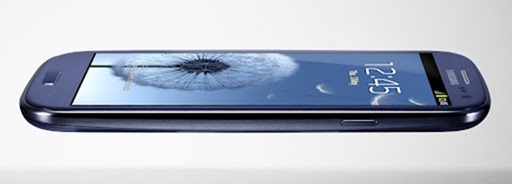
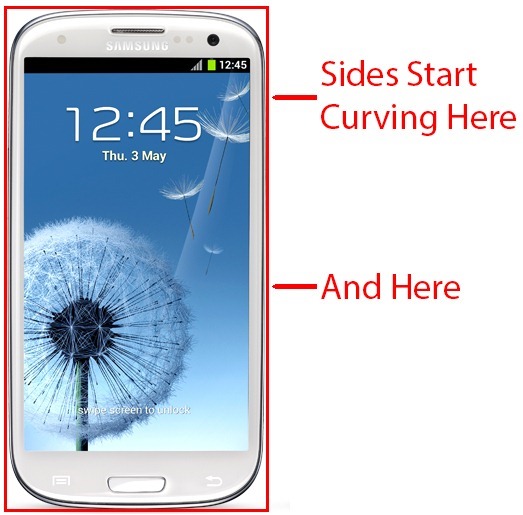
The original Galaxy S bore the brunt of much flak for looking a dead ringer of the iPhone 3GS, but that rectangular product shape Apple stakes a claim to is gone, and, under scrutiny, the curves of the Samsung Galaxy S III are so exaggerated that, for the bottom two corners, the curving process begins almost halfway down the device.


With Apple’s ownership of the rectangle no longer threatening, Samsung’s lawyers can also rest assured that Apple’s "rights" over the color black are not going to come back to haunt them. The S III comes in white and dark blue, and although nearly every other device on the market comes in black, perhaps by offering its darker device in blue instead, Samsung feels Apple will stay off its case.

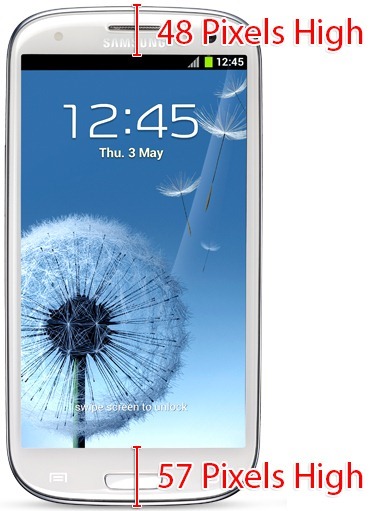
Apple claims the uniform gap between top and bottom borders is a unique idea, thus the top bezel is about 16% smaller than the bottom on the Samsung Galaxy S III. It doesn’t stop there. In April of 2011, one of Apple’s trade dress infringement claims against Samsung was "a display of a grid of colorful square icons with uniformly rounded corners," – which was stopped with the Galaxy S II – has also carried on with the S III.


In fact, the only real similarity between the Samsung Galaxy S III is the metallic band around the edge, and although it seems an isolated incident, will that stop Apple’s lawyers chasing?

Apple’s oft bullish and obnoxious claims of infringement are one thing, but Samsung playing into their hands in this way is a trend that can only get worse as time presses on.

Thoughts?

Samsung Galaxy S3... "Designed for humans"

By: Unknown on: Wednesday, May 09, 2012

May 7, 2012


Yes ladies and Gentlemen I'm talking about the Samsung Galaxy S3 and The HTC One X


The wait is finally over. Samsung unveiled the awaited top end Android phone – a successor to the king of smartphones from last year, the Samsung galaxy S II. The new phone christened as Samsung Galaxy S3 comes with tons of new exciting features. So will this top notch product from the biggest smart phone maker in the market beat the other top end droids in the market, such as HTC One X? In today’s article, I am comparing the two highly specced rivals, the S3 and the One X.


Display & Size:


Dimension wise, the phones don’t have much difference. The S3 is thin like its predecessor, measuring 8.6 mm. Its footprint measures 136.6 * 70.6 mm. The One X on the other hand measures 134.4 mm lengthwise, 69.9 mm breadthwise and 8.9 mm in thickness. The S3 weighs around 133 g while the One X weighs about the same – 130 g. The Galaxy S3 has introduced a new level in the Super AMOLED display. It sports a 4.8 inch HD screen with a resolution of 1280 * 720 pixels. The stunning graphics, clear text and colorful images leaves us impressed. The One X too has a huge display of 4.7 inch: super IPS LCD 2 touchscreen of the same resolution as that of the S3’s screen. Both screens are protected by the Corning Gorilla Glass technology.


Operating System:


Both phones have an Android platform. The version in both phones is the latest Ice Cream Sandwich (v4.0). The S3 is powered by a quad core Exynox chipset processor clocked at 1.4 GHz. The One X on the other hand is powered by a quad core Nvidia Tegra 3 chipset processor but with a higher clock speed of 1.5 Ghz.


Memory:


The S3 comes in 3 models based on internal capacity – 16 GB, 32 GB and 64 GB of storage space. The phone also accommodates 1 GB RAM. The One X on the other hand, has 32 GB internal space out of which 26 GB is user available and 1 GB RAM. The S3 has a micro SD slot that can house up to 64 GB. The One X on the other hand, does not possess a micro SD card slot. The S3 is definitely the winner in this aspect.


Camera:


The phones have 8 MP sensors in the rear with some amazing features such as zero shutter lag exposure, LED flash, auto focus, simultaneous HD video and image recording, geo tagging, touch focus, face and smile detection, etc. Video recording is done at a quality of 1080p and a frame rate of 30 fps. The video capturing feature in the One X has many other facilities such as stereo sound, video stabilization, etc. The S3 has a 1.9 MP shooter in the front and a 720p video too as its secondary camera. The secondary camera in the One X consists of a 1.3 MP camera and a 720p video.


Connectivity:


The phones have GSM and HSDPA bands for 2G and 3G connectivity. As for 4G network, the S3 has LTE (regional) facility. The phones have EDGE and GPRS features. Wireless network is enabled via Wi-Fi 802.11 a/ b/ g/ n, Wi-Fi Direct, DLNA, etc. The phones can also function as Wi-Fi hotspots. An advanced and better version of Bluetooth, v4.0 is available in the phones. The phones also come with NFC chips.


Battery Life:


The S3 has a Li-Ion battery rated at 2100 mAh. The One X has a Li-Po battery rated at 1800 mAh.


Price:


The One X is available around $680. The S3’s price is expected to be around $700.

The most powerful phones on the market

By: Unknown on: Monday, May 07, 2012

May 4, 2012


There’s a lot riding on the Samsung Galaxy S3 – it’s the successor to the 20million selling S2, it’s the Android phone best-placed to take on Apple’s iPhone, and it’s the device that Samsung hopes will cement its reputation as an innovator. 

Samsung added a new sensor that tracks your eyes – so long as you’re looking at the S3’s screen, it won’t dim or lock itself. Yes, you could just set the screen timer to longer, but “Smart Stay” means you don’t have to. In use, the feature seemed to work very well, with a little icon indicating the phone is watching your eyes. 

On a similar note, if you’re looking at a contact, or a message from a contact, the S3 automatically dials that person when you put the phone to your face. It’s one less button to press. 

An improvement to voice control, called S-Voice, that lets users control their phone using normal, natural language. So it’s like Siri, only it does more – you can say volume up, for instance, and the phone will filter out the noise of the song it’s playing so it can hear you. The S, we assume, stands for Samsung. 

Elsewhere, the phone adds useful features that, for instance, can automatically share a photograph you take with people whose faces are recognized, called ‘Buddy Photo Share, or display social media profiles directly on a photograph when those face are recognized. These are features that are useful rather than revolutionary, but they feel like they will be obvious standards in the near future. Tagging groups and offering an automatic slideshow zooming into the faces in a picture are also useful additions. Samsung, unless the patent wars cause further upset, is setting new standards. 

When it comes to features such as S-Beam, which transfers files quickly between devices by touching them together, or sharing the phone’s screen content with other devices, these are increasingly becoming more widespread industry standards, as indicated on the new Motorola Razr, which offers similar concepts. The Samsung processor is fast enough to allow crystal clear video to play in a window on your homescreens. 

Are there areas where the phone disappoints? The camera is just 8MP – good, but not market leading – although it has been upgraded to offer a 20-shot burst mode and the automatic selection of a best picture. The firm insists on pre-loading apps which I don’t see much use for – while Dropbox (including a remarkable 50GB of storage for two years) and Flipboard are useful, the Music, Game and Video Hubs will have to offer remarkable content to outplay the entirety of the app store, Google Play. 

A 2,100mAh battery is big, but this is a demanding phone that users will have on more than ever before, not only thanks to the screen that stays on because you’re looking at it. Samsung assures that the performance will be better than the SII; it needs to be much better. It’s good to see, however, that one of the range of optional accessories will be wireless charging, via a special back and charging pad ideal for the bedside table. 

Specifications: 


Screen: 
4.8” Super Amoled HD display (~306 ppi pixel density)) 

Dimensions: 
136.6 x 70.6 x 8.6 (L x l x h) 

Storage: 
16/32/64GB depending on model, plus expandable MicroSD card up to 64 GB 

Cloud storage: 
50GB Dropbox for two years 

Colour: 
Pebble blue or marble white 

Battery: 
2,100mAh (wireless charging optional extra) 

Camera: 
8MP rear; 1.9 MP front 

Resolution: 
720 x 1280 px (306ppi) 

RAM: 
1GB 

Dimensions: 
136.6 x 70.6 x 8.55 mm 

Weight: 
133g 

Operating System: 
Android 4.0.4 

Processor: 
Exynos 4 Quad (1.4GHz) Type: Cortex-A9 (the same one on the new PSP) 

Details: 
Mali-400MP for graphics Chipset: Exynos 4212 Quad 

Connectivity: 
3G Network: HSDPA: 850 | 900 | 1900 | 2100 

3G Data: 
HSDPA, 21 Mbps; HSUPA, 5.76 Mbps 

Bluetooth: 
v4.0 with A2DP, EDR 

W lan: 
Wi-Fi 802.11 a/b/g/n, DLNA, Wi-Fi Direct, Wi-Fi hotspot 

NFC - Digital compass - MicroSIM card support only - S-Voice natural language commands and dictation - Dropbox (50 GB storage) - Active noise cancellation with dedicated mic - TV-out (via MHL A/V link) - SNS integration - MP4/DivX/XviD/WMV/H.264/H.263 player - MP3/WAV/eAAC+/AC3/FLAC player - Organizer - Image/video editor - Document editor (Word, Excel, PowerPoint, PDF) - Google Search, Maps, Gmail, YouTube, Calendar, Google Talk, Picasa integration - Voice memo/dial/commands - Predictive text input (Swype) 


Samsung Galaxy S3... or as i'd like to call it the "IPhone slayer"

By: Unknown on: Friday, May 04, 2012

May 2, 2012

Although Nokia have been going through a rather difficult spell in recent years, they have still been managing to cling on to the top spot when it comes to global sales of cellphones – until now. According to new research conducted by a number of analytics firms, Samsung have ousted Nokia from the top of the leader board.


The reports, conducted by IHS iSuppli and Strategy Analytics show that the Finnish handset maker has been unable to cling for dear life on the top spot and has finally been knocked from the perch by Samsung due to Nokia’s poor sales performances of recent times.

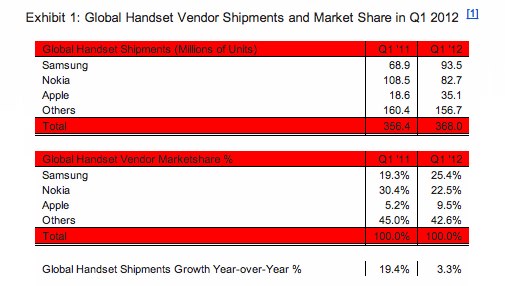
In the first quarter of 2012, Nokia’s market share dropped down to a low of 22.5% while Samsung raced into the lead by holding a 25.4% of the global mobile market. In the same period, Apple were sitting with a 9.5% hold, which may not seem like a great deal but considering the company only produces the iPhone, this is quite some achievement.


One of the main reasons for Nokia’s fall from the top of the cellular grace was down to the company’s low-end device sales in emerging markets dropping off, something that they were unable to offset with the sales of their top-end devices like the new Lumia range of smartphones. Neil Mawston, who operates as the Executive Director of Strategy Analytics, reminisced about Nokia’s current issues and their golden years:

Nokia’s volumes were squeezed at both ends, as low-end feature phone shipments in emerging markets stalled and high-end Microsoft Lumia smartphones were unable to offset the rapid decline of Nokia’s legacy Symbian business. Nokia was the world’s largest handset vendor between 1998 and 2011, for 14 years, before finally yielding top position to rival Samsung this quarter.

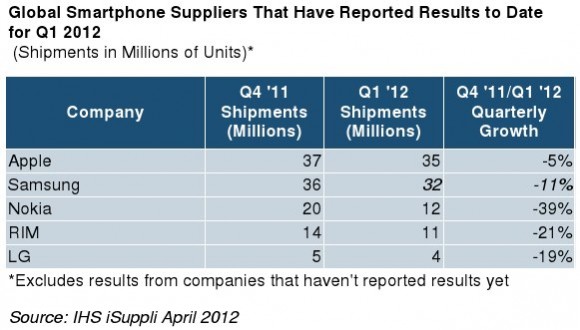
Although the statistics refer to sales of all mobile phones, the main focus of the market is currently centered around top-end smartphones, sales of which suffered in the first quarter of 2012 across all major manufacturers. As the table below from IHS shows, Apple suffered a 5% decline is sales with Samsung experiencing a change of 11% during the same period. Nokia’s woes continued as their shipments of smartphones dropped by eight million units in the first quarter.


We have been used to seeing extraordinary boom in this market, but at the minute consumers are showing a reluctance in the marketplace with overall handset sales growing by a relatively small 3.3%. One of the firms involved in the research predicts that smartphone sales will be the only ones to increase in the next twelve months, growing by an estimated 35% while sales of standard handsets will decline.

Samsung Takes The Number One Spot... For The First Time

By: Unknown on: Wednesday, May 02, 2012

 
Copyright © @AndroidBasha's Blog