Mar 5, 2012


Android is already the top smartphone operating system in the world, and is taking over the tablet market, too. As an Android lover, I couldn’t be happier about it. Oh wait, maybe I could be… What if the little green robot would make the jump to an entire new class of devices? No, I am not thinking about computers, although Google certainly thinks about that possibility.


I am talking about something bigger and way more exciting. Something like a pair of HUD glasses, an intelligent washing machine, a smart mirror, or even a connected car. What if Android could breathe life in all the “dumb” objects that we use every day, to make them smarter and more useful? On smartphones and tablets, Android makes our lives better already. Just imagine what impact it could have in a world of smart devices, all connected to each other.

Android everywhere is not the stuff of sci-fi. It’s happening right now. Sooner that you think, Android may take over the world. Here’s a list of amazing objects, from wristwatches to cars, that already run Android. If you think that i missed something, give me a shout.

1. Watches

Most little boys (and plenty of grown-up ones) dream about having Dick Tracy’s watch. And why wouldn’t they? What’s more awesome than to have a smart gadget on your wrist? The first modern smart watches were repurposed iPod Nanos, but as usual, Android took the concept to the next level. From Swiss-made luxury pieces to rugged wristband-mounted computers that happen to show the time, Android is coming to a watch near you.

The MOTO ACTV is so advanced that Motorola doesn’t even call it a watch. The “fitness device” incorporates a GPS tracker, MP3 player, and heart rate monitor. Here are a few specs:
  • 1.6-inch screen protected by Gorilla Glass 
  • 600MHz TI OMAP processor 
  • 256 MB RAM 
  • 8GB or 16GB of storage 
  • FM radio, Bluetooth, Wi-Fi 
  • Weight: 35g 
It wasn’t long before someone rooted the MOTO ACTV and installed Honeycomb on it. So, if you really want to, you can play Angry Birds or watch YouTube videos on it. How’s that for a “watch”?

Here’s another example, from Wimm Labs:


Wimm Labs sells tiny Android devices, about the size of postal stamp, which can be mounted as watches, on bike clips, on pendants, and even on keychains. In fact, there are few places where you can’t put them. The company’s flagship product is the Wimm One, “a wrist-based companion for people who desire more control over their smart devices and notifications”. In other words, you can pair your watch with your Android smartphone to get messages and notifications on your wrist. You can even install apps on it.

2. Smart glasses

Google has an awesome new product in the pipeline, a pair of smart glasses, reportedly coming later this year. For now, all we have is rumors, but that’s enough to get an idea about how will these ground-breaking glasses will work. What we know so far: 

  • Heads Up Display (HUD) – the image will be imposed on your field of view 
  • GPS tracker included 
  • Controllable with head tilts and voice commands 
  • Integrated with Google Maps, Goggles, Latitude, and other services 
  • Running Android 
  • Video camera included 
  • Processor, RAM, and storage that are similar to a smartphone’s 
  • Cost: $250-$600 
The Google glasses will turn the dream of countless sci-fi scriptwriters into reality. Finally, true augmented reality becomes accessible. And you won’t look like a total dork wearing them, because they’ll purportedly look something like this:


Speaking of Android smart glasses, you can already trick out your ski goggles with Mod Live, a tiny Android-powered HUD that displays coordinates, altitude, or temperature, on a tiny screen mounted on the goggles.

3. Home Appliances

I think we all agree that washing machines and fridges are really not that exciting. Perhaps, a touch of Android could make them more interesting?

Smart appliances running Android are already here. Samsung and LG (who else) have a few interesting products available, including a fridge with a built-in touchscreen display running Android or a washing machine that can connect to your smartphone and tell you how long you have to wait for the washing cycle to end. Besides the obvious apps (cooking recipes, food inventory, dieting, remote control), these smart appliances can also connect to the net, so you can read your mail or check out your Twitter feed before grabbing your milk.


Although not as spectacular as other devices on this list, smart home appliances running Android have the potential to massively improve our lives. Let’s face it – our world moves forward thanks to modern technology. Why would we neglect home appliances?

4. Cars

Speaking of moving forward, carmakers have long been criticized for not updating in-car technology for the 21th century. But slowly, things are changing.

A number of automakers, upstream suppliers, and aftermarket providers have created Android-based infotainment systems. One of the best efforts belongs to struggling Swedish automaker Saab (formerly owned by GM). Saab’s iQon includes all the tricks you would expect from an infotainment system, plus a voice controlled navigation system, a full-fledged browser, and an app store. Moreover, iQon has access to the internal sensors of the car, which are made available to developers via an API.

Unfortunately, Saab doesn’t have the level of clout required to make in-car Android known to millions of drivers. But do you know who has it? Ford.

Just like Saab, Ford has worked to make it easy for developers to create apps that can access the inner sensors of a car (don’t worry, they won’t be able to brick your car). Ford’s OpenXCproject combines Android with the Arduino open source hardware platform to tackle the problem posed by building short lifespan technology (Android is barely three years old) into a product that is designed to be used for 15 years or longer. With an OpenXC module installed on your car, any Android app will be able to access sensor information (speed, position, gas level, even steering wheel angle) and do all sorts of interesting things with them. From mapping your itinerary on your Android smartphone to making driving recommendations based on your driving style, the horizon is wide open.

5. Homes

Home automation systems (HAS) have been around for a while. Costing from $5000 for a basic system to $300,000 for the more extravagant setups, automation systems are increasingly popular, especially for newly built homes. Typical systems control heating and cooling, lighting, and alarms, but there is little you can’t automate in a home – appliances, sprinklers, pools, home theaters, etc.

Current HAS rely heavily on proprietary wireless protocols and expensive hardware. Announced last year, Google’s Android @ Home platform promise to offer a different way to implement home automation. By pairing an Android device with an Arduino module (a cheap, open source microcontroller), Android @ Home will make it easy for developers to automate things like light bulbs and door locks.

We can only imagine a future in which you ask your home to prepare your bath or to update you on the latest news. Android @ Home will make it possible.

6. Cameras

Some may argue that the 8 MP camera of a Samsung Galaxy S2 is better than many point-and-shoot cameras out there. But that won’t stop camera manufacturers like Polaroid from adding Android to their offerings.


Polaroid’s SC1630 smart camera is a hybrid between an Android phone and a point-and-shoot. In fact, when you look at the device from the rear, it’s easy to mistake it for a “regular” smartphone. Well, if you can make abstraction of the 3X optical zoom module. Here are some specs: 

  • 850/1900/2100MHz WCDMA and 850/900/1800/1900 GSM radio 
  • WiFi, Bluetooth, GPS, FM radio 
  • 512 MB RAM 
  • 512 MB built-in storage, expandable to 32 GB via SD 
  • 800X400 3.2-inch touchscreen 
  • 16 MP sensor, F3.1-F5.6 aperture, 3X optical and 5X digital zoom 
7. Smart TVs

Making television smarter is a hot trend this year, and Android is, for many manufacturers, the smart TV operating system of choice. Smart TVs connect to the Internet and can run apps, have built-in webcams for Skyping, and can connect wirelessly to your laptop, tablet, or smartphone. Just consider them really big computers that you can operate with a remote control.

One of the hottest smart TVs of the moment is Lenovo’s first foray into the TV business, the 55-inch K91 smart TV, running Android 4.0. Showcased at CES in January, Lenovo’s device truly deserves its “smart TV” moniker. Why? Let’s see: 
  • Powered by a dual-core Snapdragon processor 
  • Over 100 apps pre-installed, with more available via Lenovo’s Appstore. 
  • 5-MP camera for video-chatting 
  • Face-recognition that enables easy parental locking 
  • On-Demand Video service 
  • Voice-controlled remote control with built-in touchpad 
  • 8GB of built-in storage space 

8. DECT phones

If you’re tablet and smartphone are not enough to feed your Android addiction, maybe you can get your fix with the $169 Archos 35 Smart Home Phone. The gadget can pair with your Android smartphone to sync contacts and apps, which you will be able to run on the “handset”. Other nifty features are the video chat app, the email access, and built-in web browser.


The Archos 35 brings the DECT phone right into the mobile age. Who knows, smart DECT phones might even slow down the landlines’ inevitable drift into obsolescence.

9. Game consoles

For most of us, our Android smartphone is our gaming device. However, you can get a real portable gaming console that runs on Android 2.2 and plays just about any game. How’s that possible? Well, the JXD S7100 gaming tablet (coming at you straight from Shenzhen, China) includes an emulator that lets you play classic titles, such as Mario Kart 64, King of Fighters ’97, or Tomb Raider. Just don’t ask about the copyright, though…

The exterior design of the JXD S7100 looks like a PSP clone with a touch of Apple, but the guts of the device are downright impressive: 

  • 7-inch touchscreen display, with 800X480 resolution 
  • Dual-core Cortex A-9 processor 
  • Mali 400 graphics 
  • 512MB of RAM 
  • 2MP rear camera, 0.3 MP front camera 
  • 16GB of internal storage 
  • 1080p HDMI-out 
  • Android 2.2 
Another player (see what I did there?) in the Android game console arena will be the EVO 2 from Envizions, slated for a 2012 release. The EVO 2 will be the first “full-sized” console to run Android, the 2.2 version to be precise. The console will have full access to the Android Market. Unfortunately, the EVO 2 was repeatedly delayed, so we can’t tell you precisely when (if ever) you will be able to give it a spin.


10. Mirrors (you read that right)

Have you ever dreamt of checking your Facebook status while brushing your teeth in the morning? What, you haven’t? Anyway, the Cybertecture smart mirror will let you do just that. Seeing it in action, you can’t help thinking that it’s the future. Basically, the gadget is an interactive display running Android, which happens to double as a mirror. You can check your Facebook status, read the news, even emails, all from your bathroom.

The smart mirror comes with a smart (of course) scale to monitor your weight and body fat index, which you can see on the mirror, along with some neat graphs that show how your diet is working. Somehow disappointingly, the Cybertecture is controlled with a remote control, and not through touch. Even more disappointingly, it will set you back a cool $7700.
Which Android Devices Do You Like the Most?

Wow, that was quite a ride. Android is already built in a variety of devices, and, as we speak, more and more companies and individuals are working to add it to more aspects of our lives.

Which unconventional Android devices do you like the most? What are you most excited about? Did i miss something? Let me know.

The domination of Android

By: Unknown on: Monday, March 05, 2012

Feb 27, 2012


Once upon a time in the not too distant past, Nokia were considered to be producers of mobile phones which were at the cutting edge of technology. The Finnish company were at the forefront of the smartphone boom and were once the world’s largest vendors of smartphones, an accolade which which seems a million miles away now. Nokia smartphones were historically shipped with the Symbian operating system, and with the emergence of Apple’s iOS and the Google Android operating systems, it was evident to all that something needed to change within Nokia if they were to even attempt to get back to former glories.

That change came just over twelve months ago with the announcement of a partnership with Microsoft, meaning that going forward, Nokia smartphones would adopt the Windows Phone platform in the hope that Microsoft’s software and Nokia hardware would form a formidable partnership to rival Apple and Google. It is too early to tell if that plan will come to fruition, but Nokia recently took a baby step on the road to recovery after it was announced recently that were the largest vendors of Windows Phone handsets in Q4 of 2011, which represents a positive step for the company but still pales into insignificance when you consider the 0.9 million units were are talking about.

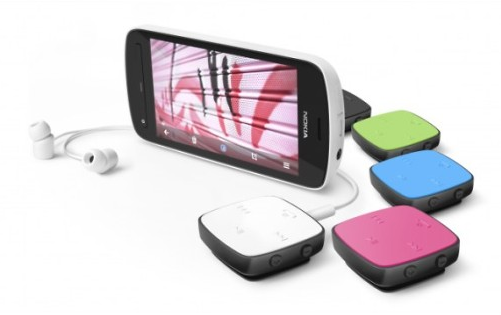
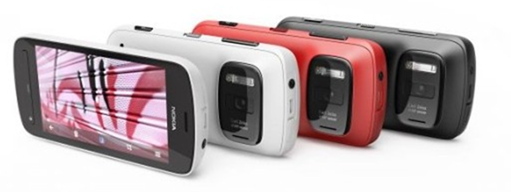
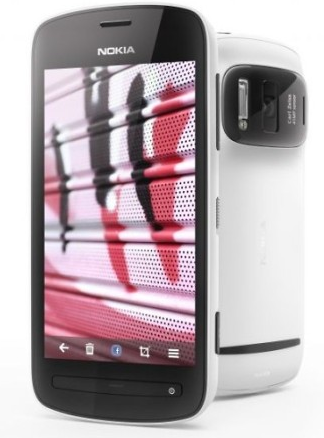
We are getting the news today that Nokia are once again in the business mood with the confirmation that they are about to introduce a new device, the Nokia 808 PureView, which will feature a staggering 41-megapixel camera which is built upon the company’s pixel oversampling technology. The PureView 808 will take over from the Nokia N8 smartphone and will be running the Symbian operating system, but experts are predicting that this could be the last release from Nokia which is built upon the soon to be faded-out OS, with the company shipping Windows Phone devices. If this is indeed Symbian’s swan song, then what a way to go with a camera capable of taking 41-megapixel photographs and bringing satellite imaging to a smartphone.


The PureView smartphone has been unveiled at this year’s Mobile World Conference which is taking place in Barcelona, and although it will showcase on a Symbian powered device, Nokia have confirmed that it does plan to bring the new technology to a new range of phones which will indeed run the Windows Phone OS. Jo Harlow, Executive Vice President of smart devices at Nokia has stated:

We’ve been working on this technology for some time, with the intention to mature and commercialise it to take it across our portfolio. We wanted to make the Pureview 808 recognisable as the best smartphone camera device in the world, and our design team have done a great job accomplishing that.

The fact that the company has mentioned that the PureView 808 is being launched as "confirming our significant short term investments in Symbian" and with the above statement in mind that it will be taken across the Nokia portfolio, is a definite indication that the staggeringimagine technology will soon be seen on Windows Phone devices, something which will encourage users to jump ship from their favored OS and at least give the devices a try.

The new technology which will be featured in the PureView smartphone will not only give users the ability to capture images at 41 megapixels, but allows them to zoom, reframe and crop the images, post shooting, which allows access to previously unseen levels of detail, according to a Nokia statement.

With superior low-light performance and the ability to save in compact file sizes for sharing in email, MMS, and on social networks, the Nokia 808 PureView makes it possible for anyone to capture professional looking images in any conditions.

With full 1080P video playback, lossless zoom and higher quality rich recording, it would seem that the Pureview is definitely here to make a statement and will appeal to photography and media fans who appreciate something that is a little bit different. The smartphone should be available sometime in May of this year with pricing structure yet to be announced.


Dreamt up in a hotel bar in Japan by a couple of Nokia execs, the Nokia 808 Pureview phone has completely stolen MWC with its 41-megapixel sensor. I grabbed some time with Nokia's lead programme manager for imaging, Damian Dinning, to chat about how it's "almost like [they've] just invented time travel, it's that extreme."

Having already confirmed that the company's looking at transferring the imaging capabilities of the 808 Pureview into other Nokia devices (such as Windows Phone 7 handsets), Damian Dinning Nokia's lead programme manager for imaging said "how [they] blend those features in each device may be different, but we'll see the same elements every time."

One question I really wanted to ask - along with many of you, I'm sure - is, "why Symbian?" The technology took five years to get to the point of conception to aaaalmost being ready to hit the market (indeed, Nokia's still fine-tuning its low-light sensor before its May release), but instead of delaying it by another year to propel it onto the best-possible OS within Nokia's reach, Dinning said they just couldn't imagine delaying the technology any longer for its customers, when they can do it today. "I can't rationalise any benefit to delaying it for a further year, just so it can run Windows Phone 7," he said, adding that "if you have something really incredible today, then do it today."

Apart from the fact it's running Symbian (in the Belle OS flavour), an OS Nokia has been oft-rumoured as ditching, there are several more "flaws" I've overheard people pick up on, either on the show-floor or in the comments field of Giz. The thickness of the thing (at its thinnest point, it's 13.9mm, and at the camera lens, it's 17.95mm) is challenging to say the least. The third issue is that it doesn't have an optical zoom, instead leaning once more on digital. Dinning confirmed that they've "been wanting to do a proper zoom for some time, but they haven't been able to do an optical one, because of the size." Adding that "you can increase the size of the optics, but you then end up with a device no-one wants to buy," he said it was back to the drawing-board for the team, which managed to shroud the 808 in absolute secrecy since its original conception - a huge feat in this very leaky age we live in.

It's obvious companies are leaning towards top-notch imaging sensors as being their saviours, with the camera being the crown jewels in the iPhone 4S, Samsung S3 (Soon to be released) and HTC devoting most of its press conference yesterday to its new camera technology in the One series of phones. Dinning cast aside the other manufacturers' efforts, saying "what others have been doing is incremental updates, but no-one's made that step forward to make a real difference."


It's the "pixel-oversampling" technology that Nokia's quick to boast about, lest anyone thinks they just slapped a couple of extra digits on the sensor size, in an obvious ploy to grab headlines. Taking 41-megapixel images and scaling down to 5-megapixels, Dinning told us the chipset retains all the valuable data about a scene, but "throws away the stuff you don't want, like noise and artificial data." Supposedly it excels in low-light because of this pixel-oversampling tech, The company does seem to be very aware that most of its users won't shoot at 41-megapixels, especially given most photos wind up on Facebook nowadays. Within the gallery app, a Facebook logo uploads a picture automatically, at around 2 or 3-megapixels in size. But you can manually switch over to shoot in a 38-megapixel mode, which uses eight pixels for every final pixel (in a 5-megapixel photo anyway), to fold in the kind of crisp details that blew my mind when i saw pictures taken by the phone.

The display, a 4-inch AMOLED, is bright and clear considering its 640 x 360 pixels, and the sample photos shot with the 808 were just incredible. Obviously sending professional photographers to South Africa to take your sample shots makes a world of difference, but I just couldn't believe the level of detail when zooming in on a photo shot at just a 5-megapixel resolution. If our amateur snaps are half as good as the professional sample shots, then I think most people will be happy with the phone's performance.

It seems even the people at Carl Zeiss, which has worked exclusively with Nokia for years on its lenses, are thrilled with the performance of the 808′s camera. Saying that just hearing Carl Zeiss state they were "happy" with a cameraphone would be more than enough for them, but in this instance, they apparently sent Nokia an enthusiastic email saying that "the optics are really good," and even affixed it with a smiley-face emoticon. Quite incongruous for the famously-grumpy Germans, I'm sure you'll agree.

Nokia 808 PureView: Monster Camera, Dead Software

By: Unknown on: Monday, February 27, 2012
Considering that Samsung have been experiencing a little bit of ridicule recently thanks to the release of the monstrous Galaxy Note, which by the way features a stylus, they could do with introducing something publicly appealing at this years Mobile World Conference in Barcelona. The Korean company was widely predicted to be all quiet on the new product front at MWC due to the fact that they don’t have any official press events planned and that they actually pulled out on launching the Galaxy S3 at the event in favor of delaying for a more worldwide universal launch.


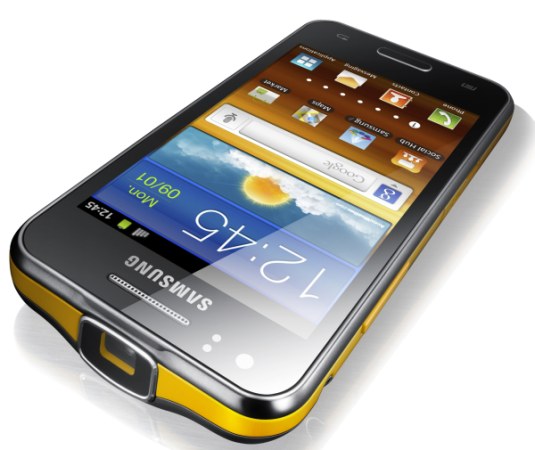
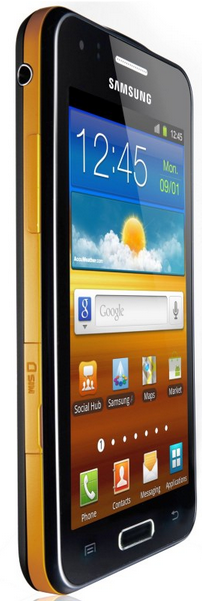
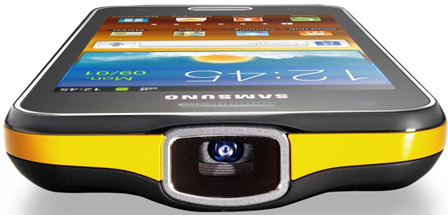
However, they have managed to shock us by introducing the Samsung Galaxy Beam smartphone which is a refreshed version of the original projector based handset but with the latest version packing some serious specification upgrades. The Galaxy Beam is able to boast a very decent specification packed into a 4-inch WVGA display. The internals of the phone host a dual-core ST-Ericsson Cortex A9 processor with 768MB of RAM which doesn’t represent a ground breaking device, but at the end of the day the device will be judged on its main feature – the built in projector.


The internal project, located at the top of the device, makes use of a 640 x 360 resolution with a 15 lumen brightness and able to project an image that can be up to 50 inches wide. The projector will come in particularly handy for those who wish to share images or videos with friends or family, work based information with colleagues in a meeting or even just play your favorite game in 50 glorious inches instead of the built in 4 inch display. The handset itself is a stunning 12.5mm thick giving it the title of the world’s thinnest projector phone, although to be fair, it doesn’t really have a great deal of competition on that front.


Samsung have done a great job of managing to house the all important projector in a manner which doesn’t detract from the aesthetics of the phone and actually manages to remain attractive in appearance. However, Engadget notes that the project doesn’t feature any recess around it and therefore could be a bit of a fingerprint magnet, so be prepared to wipe it clean before you start to beam those images around the office.


The device will come with a decent 8GB of internal storage which should allow plenty of images and videos to be stored, allowing good use of the projector. It will also come shipped with Android 2.3 but as yet I have no official details of when the Galaxy Beam will be available to the world. From the released images of the Beam, it actually looks like a very accomplished smartphone and I am definitely looking forward to checking this one out in person.

Samsung Introduces New Android Powered Galaxy Beam Smartphone With Built-in Projector

By: Unknown on: Monday, February 27, 2012
As an Android phone user, I'm thrilled to see the rapid adoption of open source platform smartphones in the marketplace. It seems like every week there's a new report that Android is overtaking Apple's iPhone as the phone of choice for today's consumer. It wasn't that long ago, however, that the iPhone was said to be cornering the smartphone market. So, what's behind

 the change?


Strength in numbers - One possibility is that the FOSS community finally has a smartphone they can stand behind, since the iPhone doesn't prove to be very popular with those who don't want to support Apple products or philosophy. The sheer number of people in the open source community who pounced on a phone with the a platform that's near and dear to their hearts may be enough to drive sales numbers through the roof.

New is fun - It's no secret that geeks love to try new things. Tweakable open source phones are a new phenomenon in the marketplace and anyone who loves to tinker with software would be naturally drawn to a smartphone designed to indulge their whims. Sure, iPhones can be jail-broken, and many people go that route, but Android phones let users get under the hood and change things up without the messiness of voided warranties and painful bricking. Android phones let hobbyist hackers alter their phones without all the fuss.

Choices, choices - Another reason for the success of Android phones is simply that there are just so many to choose from. In the U.S., only AT&T is contracted to sell iPhones while virtually all cell phone carriers sell at least one Android smartphone. Simple math dictates that the volume of different Android-based mobile devices means more of them will find their way into the hands of consumers.

People love free - There are a metric ton of apps for the iPhone, but the majority of the good ones cost money. Ninety-nine cents here or there isn't a big deal, but dozens of paid apps add up over time. The Android Market has a huge array of free apps that are really useful and that no doubt appeals to consumers when deciding which type of smartphone to choose.

It's tempting to view the popularity of Androids phone as an indication that they are inherently better than the iPhone. In the end, it boils down to what a consumer wants their smartphone to do and how much of a hands-on approach they want to have in order to make the device do their bidding. It's great to see an open source-based mobile device have its day in the sun, but it's important to cast a critical eye on why that might be the case. That way, the FOSS community can effectively support Android and other open source mobile platforms like MeeGo and Symbian as they come to market.

Android... The power of open source

By: Unknown on: Monday, February 27, 2012

Feb 25, 2012


According to his official biographer, Steve Jobs went ballistic in January 2010 when he saw HTC's newest Android phones. "I want you to stop using our ideas in Android," Jobs reportedly told Eric Schmidt, then Google's CEO. Schmidt had already been forced to resign from Apple's board, partly due to increased smartphone competition between the two companies. Jobs then vowed to "spend every penny of Apple's $40 billion in the bank to right this wrong."

Jobs called Android a "stolen product," but theft can be a tricky concept when talking about innovation. The iPhone didn't emerge fully formed from Jobs's head. Rather, it represented the culmination of incremental innovation over decades—much of which occurred outside of Cupertino.

Innovation within multitouch and smartphone technology goes back decades—the first multitouch devices were created in the 1980s—and spans a large number of researchers and commercial firms. It wouldn't have been possible to create the iPhone without copying the ideas of these other researchers. And since the release of Android, Apple has incorporated some Google ideas into iOS.


The "Digital Desk" in action, showing a pinch-to-resize gesture in 1991. Pierre Wellner

You can call this process plenty of names, some less than complimentary, but consumers generally benefit from the copying within the smartphone market. The best ideas are quickly incorporated into all the leading mobile platforms.

The current legal battles over smartphones are a sequel to the "look and feel" battle over the graphical user interface (GUI) in the late 1980s. Apple lost that first fight when the courts ruled key elements of the Macintosh user interface were not eligible for copyright protection. Unfortunately, in the last 20 years, the courts have made it much easier to acquire software patents. Apple now has more powerful legal weapons at its disposal this time around, as do its competitors. Together, there's a real danger that the smartphone wars will end by stifling competition.

Multitouch in the lab

High-tech innovations are often developed by laboratory researchers long before they're introduced into the commercial market. Multitouch computing was no exception. According to Bill Buxton, a multitouch pioneer now at Microsoft Research, the first multitouch screen was developed at Bell Labs in 1984. Buxton reports that the screen, created by Bob Boie, "used a transparent capacitive array of touch sensors overlaid on a CRT." It allowed the user to "manipulate graphical objects with fingers with excellent response time."

In the two decades that followed, researchers experimented with a variety of techniques for building multitouch displays. A 1991 Xerox PARC project called the "Digital Desk" used a projector and camera situated above an ordinary desk to track touches. A multitouch table called the Diamond Touch also used an overhead projector, but its touch sensor ran a small amount of current through the user's body into a receiver in the user's chair. NYU researcher Jeff Han developed a rear-projection display that achieved multitouch capabilities through a technique called "frustrated total internal reflection." 


Jeff Han demonstrating his multitouch work in 2006. TED

While they refined multitouch hardware, these researchers were also improving the software that ran on it. One of the most important areas of research was developing a vocabulary of gestures that took full advantage of the the hardware's capabilities. The "Digital Desk" project included a sketching application that allowed images to be re-sized with a "pinch" gesture. A 2003 article by researchers at the University of Toronto described a tabletop touchscreen system that included a "flick" gesture to send objects from one user to another across the table.

By February 2006, Han brought a number of these ideas together to create a suite of multitouch applications that he presented in a now-famous TED talk. He showed off a photo-viewing application that used the "pinch" gesture to re-size and rotate photographs; it included an on-screen keyboard for labeling photos. He also demonstrated an interactive map that allowed the user to pan, rotate, and zoom with dragging and pinching gestures similar to those used on modern smartphones.

Commercializing multitouch

In 2004, a French firm called Jazzmutant unveiled the Lemur, a music controller many consider the world's first commercial multitouch product. The Lemur could be configured to display a wide variety of buttons, sliders, and other user interface elements. When these were manipulated, the device would produce output in the MIDI-like Open Sound Control format. It debuted in 2005 and cost more than $2,000.

The market for the Lemur was eventually undercut by the proliferation of low-cost tablet computers like the iPad. But Jazzmutant now licenses its multitouch technology under the name Stantum. It raised $13 million in funding in 2009.


Jazzmutant Lemur in 2005  sonicstate.com

Jeff Han also moved to commercialize his research, founding Perceptive Pixel in 2006. The firm focuses on building large, high-end multitouch displays and counts CNN among its clients. The DiamondTouch also became a commercial product in 2006.

Microsoft says its researchers have worked on multitouch technologies since 2001. Microsoft's Andy Wilson announced Touchlight, a multitouch technology using cameras and a rear projector, in 2004. Touchlight had an interface reminiscent of Minority Report — a three-dimensional object would be displayed on the screen and the user could rotate and scale it with intuitive hand gestures.

Wilson was also a key figure in developing Microsoft Surface, a tabletop touchscreen system that used a similar combination of a rear-projected display and cameras. According to Microsoft, the hardware design was finalized in 2005. Surface was then introduced as a commercial product in mid-2007, a few months after the iPhone was unveiled. It too used dragging and pinching gestures to manipulate photographs and other objects on the screen.


Microsoft's Touchlight in 2004. Microsoft

Another key figure in the early development and commercialization of multitouch technologies was Wayne Westerman, a computer science researcher whose PhD dissertation described a sophisticated multitouch input device. Unlike the other technologies mentioned so far, Westerman's devices weren't multitouch displays; they were strictly input devices. Along with John Elias, Westerman went on to found FingerWorks, which produced a line of multitouch keyboards that were marketed as a way to relieve repetitive stress injuries.

Fingerworks was acquired by Apple in 2005 and Westerman and Elias became Apple employees. Their influence was felt not only in the multitouch capabilities of the iPhone and the iPad, but also in the increasingly sophisticated multitouch capabilities of Mac trackpads.

Touchscreen phones

IBM's Simon, introduced in 1993, is widely regarded as the first touchscreen phone. It had a black-and-white screen and lacked multitouch capabilities, but it had many of the features we associate with smartphones today. Users dialed with a onscreen keypad, and Simon included a calendar, address book, alarm clock, and e-mail functionality. The e-mail app even included the ability to click on a phone number to dial it.


IBM's Simon, introduced in 1993 TekGadg

The Simon was not a big hit, but touchscreen phones continued improving. In the early 2000s, they gained color screens, more sophisticated apps, and built-in cameras. They continued to be single-touch devices, and many required a stylus for precise user input. Hardware keypads were standard. These phones ran operating systems from Microsoft, Palm, Research in Motion, and others.

April 2005 saw the release of the Neonode N1m. While lacking the sophistication of the iPhone, it had a few notable features. It was one of the few phones of its generation not to have a hardware keypad, relying almost entirely on software buttons for input. It supported swiping gestures in addition to individual taps. And it employed a "slide to unlock" gesture, almost identical to the one the iPhone made famous.

More sophisticated touchscreen interfaces began to emerge in 2006. In October, Synaptics unveiled the Onyx, a proof-of-concept color touchscreen phone that included a number of advanced features. While it may not have been a true multitouch device, its capacitive touch sensor included the ability to tell the difference between the user's finger and his cheek (allowing someone to answer the phone without worrying about accidental inputs) and to track a finger as it moved across the screen.

The Onyx's phone application had an intuitive conference calling feature, and the device included a music player, an interactive map, and a calendar.


LG Prada in March 2007 giiks

That December, LG announced the LG Prada — beating the iPhone to market by several months. The two devices shared several common features. The Prada dispensed with a traditional keypad, relying on software buttons for most input. It included the ability to play music, browse the Web, view photos, and check e-mail.

The iPhone was finally unveiled in January 2007. LGaccused Apple of copying its design, saying it was disclosed in September 2006 in order to compete for an IF Design Award (which it won). The accusation doesn't hold much credibility, however. Although the phones have undeniable similarities, the iPhone features a more sophisticated user interface. For example, the iPhone used the flick-to-scroll gesture now common on smartphones; the LG Prada used a desktop-style scroll bar. The two phones were likely developed independently.

So is Android a stolen product?

Great artists steal

In a sense, the answer is almost certainly "yes." It's hard to imagine how Google could have prevented some iPhone innovations from seeping into Android design. The iPhone was the talk of Silicon Valley in 2007 and 2008. It would have been practically impossible for the Android development team to avoid learning about iPhone features. Once Google's engineers were exposed to the concepts Apple pioneered, they couldn't help but be influenced by them.

But if Google is guilty of using Apple's ideas, Apple is equally guilty. Many researchers and companies invented technologies that predate the iPhone but made it possible. As Microsoft's Buxton points out, Wayne Westerman (the multitouch researcher who sold his startup and became an Apple employee in 2005) cited the work of numerous early multitouch researchers in his 1999 PhD thesis. The iPhone incorporated key innovations pioneered by Bob Boie, IBM, Jazzmutant, Jeff Han, and others.

Indeed, what made the iPhone such a great product was precisely that Apple drew together a number of innovations already developed separately—touchscreen phones, capacitive touchscreens, sophisticated multitouch user interfaces—and combined them in a product greater than the sum of its parts. This pattern of combining and refining of previous innovations is the rule, not the exception, in innovative industries. Android is simply the latest example of the pattern.

While Android clearly adapted some important iPhone innovations, Google's engineers also added refinements of their own where they felt Apple's approach lacked them. For example, the early iPhone notification system left much to be desired. As we put it last year:

Every new SMS or push alert showed up as a modal dialog box in the center of the screen, forcing the user to make a decision immediately. The system also offered no way to see multiple notifications at once.

Google came up with a more flexible notification scheme. Rather than presenting them in a modal dialog box requiring immediate input before a user could proceed, Android displayed notifications briefly at the top of the screen, then added an icon atop the screen to signal existing notifications. When a user was ready to respond, she simply pulled down the notification bar to see a list of all pending notifications.


The Notifications Center in iOS 5, 2011 Apple Inc.

Apple revamped its notification system in iOS 5, introducing a Notifications Center that was strikingly similar to Android's notification scheme. Apple added its own refinements, such as the ability to add widgets displaying the weather, stock prices, and other frequently-updated information. But the basic approach—notifications displayed at the top of the screen accessible through a pull down gesture—is virtually identical to the approach Google invented.

Users benefit from this kind of copying. Google's notification scheme was better than the original iPhone notifications, so it is in iOS users's interests for Apple to copy the idea. The alternative—a world in which companies scrupulously avoid using each other's ideas—would be much worse. It would become impossible to buy a smartphone incorporating the best innovations from across the industry.

Inventing in the dark

Legally, the question is whether Google infringed on Apple's patent, copyright, or other possessions. Google appears to be on safe ground from a copyright perspective. Android is built on Linux and uses a Java-like virtual machine; iOS is built on Darwin and uses NeXT-derived Objective C frameworks. We don't know of any allegations that Android was developed with literal copies of iOS code.

But whether Google infringed on Apple's patents is a harder question. And it would have been especially difficult to answer as Google was creating the first versions of Android.

Patent law generally gives a firm like Apple one year from the public disclosure of an invention to file for a patent on it. Apple unveiled the iPhone in January 2007, so the filing deadline for iPhone-related inventions would have been in January 2008. After filing, there is an additional 18-month delay before applications are made public. So if Apple filed an iPhone-related patent application on the last day before the deadline, Google wouldn't have learned of its existence until July 2009—almost a year after the first Android phone hit the market !

And even after patent applications are made public, it can take several more years for the patent office to make a decision on them. There's also no certainty about what a granted patent covers or whether it will stand up in court.

In short, Eric Schmidt's Android development team would have had no idea in 2008 which ideas were, legally speaking, Apple's ideas. The only foolproof way to avoid infringing Apple's patents would have been to avoid a multitouch phone OS at all.

History repeating

Steve Jobs eventually made good on his threats against Android. While Apple has not sued Google directly, Cupertino is now locked in legal battles with a number of major Android vendors. And unlike Microsoft, which has focused on signing licensing revenues with its patents, Apple seems genuinely determined to drive Android devices off the market.


Xerox Alto, which pioneered the graphical user interface in the 1970s Marcin Wichary

This isn't the first time Apple built a new user interface based on the ideas of others, then sued competitors for using those same ideas. The graphical user interface now standard on desktop computers can be traced back to the invention of the mouse by SRI's Doug Engelbart in the 1960s. The ideas were refined at Xerox PARC in the 1970s, where Steve Jobs famously led a group of Apple engineers to visit in 1979. Five years later, Apple introduced the Macintosh. Those ideas then found a much larger audience.

Microsoft scrambled to catch up, releasing the first version of Windows in 1985. In 1988, Apple filed a lawsuit accusing Microsoft of stealing the "look and feel" of the Macintosh. Xerox got involved in 1989 with a lawsuit accusing Apple of stealing the ideas behind the Macintosh from Xerox researchers. The courts eventually ruled key user interface concepts behind the Macintosh were not copyrightable, removing the legal cloud that had hung over early GUIs.

In many ways, today's smartphone litigation is a sequel to that far-off "look and feel" fight. But there's an important difference: a series of court decisions in the 1990s effectively legalized software patents. As a result, incumbents like Apple have more powerful legal weapons to use against would-be competitors.

Google has spent billions on patents to help it fight back against legal actions by Apple, Microsoft, and others. The search giant may have deep enough pockets to buy the patents it needs to defend itself, vindicating its right to compete in the mobile computing market.

But firms without billions may not be so lucky. The failure of Apple's original look and feel lawsuit cleared the way for smaller firms (like Jobs's own NeXT) to compete in the desktop computing market. In contrast, if a firm today has a great idea for a mobile OS but lacks thousands of patents or the billions of dollars it takes to acquire them, it will likely be defenseless against angry patent lawyers. Apple's demand that companies "stop using our ideas" will have real teeth.

That's bad for firms that want to get into the mobile OS market. It's also bad for users, who may be deprived of innovations these firms can bring to the market. But it's great for patent lawyers.

What do I think about it?... If Android is a "stolen product," then so was the iPhone. PERIOD.

- Total editing time of this post: 17 Hours and 55 Minutes.

Google vs Apple, Android vs iOS

By: Unknown on: Saturday, February 25, 2012

Feb 23, 2012


Google has announced the launch of the latest version of Android: Google Android 4.0 Ice Cream Sandwich, in Hong Kong on Wednesday - and with it the shiny new Samsung Galaxy Nexus.

That’s all very well and good, but when is it coming to your Android smartphone? Will the smartphone in your hands be getting an upgrade to enjoy some of the new features like Face Unlock and the new Roboto font?
Google on Ice Cream Sandwich

Hugo Barra, product management director of Android has stated that the aim is to get Nexus S running Android 4.0 shortly after the release of the Galaxy Nexus device but that the original Google branded Nexus One is just too old to come to the party.
Samsung on Ice Cream Sandwich

Samsung Italy has confirmed that the update is coming - but possibly not until Q2 2012. Ice Cream Sandwich will hit its high end devices including the Galaxy S II, the Galaxy Note, the Galaxy Tab 10.1, the Galaxy Tab 8.9, the Galaxy Tab 7.7 and the Galaxy Tab 7.0 Plus around the same time.

Samsung Norway has recently confirmed that the update for the Samsung Galaxy S II and Galaxy Note will be arriving by the end of Q1, so we make that March.

UPDATE: The Samsung Galaxy S won't be getting the Ice Cream Sandwich update

UPDATE 2: The Nexus S did get the Android 4.0 update, however shortly afterward Google halted the rollout of the Android 4.0 update for the Nexus S, as users started to report problems with the mobile phone's battery.
HTC on Ice Cream Sandwich

The official line from HTC to Pocket-lint is:

"We are excited about the latest update for Android, Ice Cream Sandwich, and are currently reviewing its features and functionality to determine our upgrade plans. Our goal for Android updates is to give every customer an improved user experience, which means balancing each phone's unique hardware, HTC Sense experience and the Android kernel. While our goal is to upgrade as many of our recent devices as possible, we are committed to maintaining every phone's performance and usability first. Please stay tuned for more updates on specific device upgrade plans."

UPDATE: HTC has confirmed the following:

"HTC has been working hard to get its Ice Cream Sandwich upgrades ready, and we’re excited to announce that our first round of ICS upgrades will roll out by the end of March for the HTC Sensation and HTC Sensation XE, followed soon thereafter by the HTC Sensation XL," says the phone maker. 

There is also hope for HTC EVO 3D, HTC Incredible S, HTC Desire S and HTC Desire HD owners, with the company confirming that although they won't be getting the ICS update in March, they will be getting the update at some point in 2012.

"In addition, we can confirm Ice Cream Sandwich upgrades will be coming later this year to the HTC EVO 3D, HTC Incredible S, HTC Desire S and HTC Desire HD. Stay tuned for more updates on Ice Cream Sandwich releases in the coming weeks," adds HTC.
Sony Ericsson on Ice Cream Sandwich

The official line from Sony Ericsson to Pocket-lint is:

"Sony Ericsson is currently rolling out the upgrade to Gingerbread 2.3.4 across its entire 2011 Xperia smartphone portfolio. This software upgrade will be available through a phased roll out in select markets. Beyond Gingerbread 2.3.4, we plan to upgrade our 2011 Xperia smartphone portfolio to the next Android platform made available to us. Official Sony Ericsson communication regarding software upgrades will be published on http://blogs.sonyericsson.com."

UPDATE: Sony Ericsson has confirmed on 15 November 2011 that it will be bringing Ice Cream Sandwich to it's 2011 range. 

"There have been a few questions here on the blog and in our support forums regarding our upgrade plans beyond Gingerbread. We can today confirm that we plan to upgrade the entire 2011 Xperia portfolio to the next version of Android known as Android 4.0 or Ice Cream Sandwich.

We are working on merging our current Xperia experience with the new features in Android 4.0. More detailed information regarding this upgrade, timing and global availability will be communicated in due course here on the blog."

The 2011 Xperia Portfolio is the Xperia arc and arc S, Xperia PLAY, Xperia neo and neo V, Xperia mini and mini pro, Xperia pro, Xperia active, Xperia ray as well as Sony Ericsson Live with Walkman.
Asus on Ice Cream Sandwich

"Asus Eee Pad Transformer will be getting update to ICS - but we can’t provide a schedule at this stage," Asus told Pocket-lint making it the first Ice Cream Sandwich tablet. Asus have subsequently confirmed that Ice Cream Sandwich will be rolled out to the Eee Pad Transformer following the update to the Eee Pad Transformer Prime on 12 January 2012.
LG on Ice Cream Sandwich

The official statement to Pocket-lint from LG is:

"LG is committed to offering the best smartphone experience on our Android Optimus phones. We are currently reviewing the latest Android OS release and will be making a decision with our carrier partners on a rollout schedule. Specific phone models and timing of updates will be posted on relevant local websites or at www.lg.com."

Although Unofficial reports came in that LG will not be updating the LG Optimus 2X to Ice Cream Sandwich the company was keen to debunk these on Facebook, stating:

"LG firmly denies the rumours that claim LG will not be providing the Ice Cream Sandwich (ICS) OS update for the LG Optimus 2X. These rumours are NOT true. LG is currently in the process of planning the ICS OS update for the LG Optimus 2X as well as other LG high-end smartphones. Detailed information on the ICS OS update schedule for specific models will be announced, once the ICS OS is publicly released by Google. Please stay tuned for more updates from LG."

UPDATE: According to LG's Facebook page, LG will begin rolling out the ICS Android 4.0 update between April and September 2012:

"LG will be offering the Ice Cream Sandwich (ICS) OS upgrade for a range of LG smartphones which were introduced this year. The global upgrade schedule will begin in the second and third quarters of 2012, which will be followed by a global roll out," said LG via Facebook.

"During the second quarter of 2012 upgrades will begin for the following smartphone models: the LG Optimus LTE, Prada phone by LG 3.0, the LG Optimus 2X, the LG Optimus Sol, the LG my Touch Q and the LG Eclipse.

However owners of phones like the Optimus Black and the Optimus 3D will have to wait until some time after July for the ICS update:

"These upgrades will be followed by upgrades for the following smartphone models during the third quarter of 2012: the LG Optimus 3D, the LG Optimus Black, the LG Optimus Big, the LG Optimus Q2 and the LG Optimus EX."
Motorola on Ice Cream Sandwich

Having introduced the new Android superphone to assembled European journalists, Alain Mutricy, senior vice president portfolio and product management, candidly referred to Google's Hong Kong announcement in which Ice Cream Sandwich was launched. 

Mutricy highlighted that although the Motorola RAZR had been designed for, and will be launching on, Android 2.3 Gingerbread, it has a plan in place to update the phone to Ice Cream Sandwich at the "start of 2012".

UPDATE: The company has now confirmed that the Motorola RAZR and Xoom amongst the Droid Bionic and US version of the RAZR will be getting the Ice Cream Sandwich update. 

UPDATE 2: Motorola has now said for UK readers, the first Motorola devices to get Ice Cream Sandwich will be the Motorola Xoom Wi-Fi-only, the Xoom Family Edition and the Motorola RAZR. Rollouts will begin sometime between March and May.

Then the wait begins.

For Motorola Xoom 2 customers, you'll have to wait until the summer to get your update. Motorola is saying the update is in development and that they are working to get it out for some time in Q3. That's June to August for those who care.

After that it's anyone's guess of when or if you'll get the update. Devices in that pile for UK readers include the Motorola Xoom Wi-Fi and 3G model, The Motorola Atrix and even the newly announced MotoLuxe and Motorola Pro+.

Motorola has also confirmed that if you own a Defy Mini, a Defy+, Milestone 2, Milestone, Defy MB525, Charm, Flipout, Milestone XT720, Backflip or Dext you won't be getting any updates. The version of Android you currently have is the version you are stuck with.
Viewsonic on Ice Cream Sandwich

The official line from from Derek Wright, ViewSonic European Marketing Manager to Pocket-lint is:

"Within Viewsonic we are committed to delivering a great out of box experience with our tablet & phone products. The V350, 7e, 10e are our latest products to be announced as value propositions, all featuring Viewscene 3D the visual aspect of Android does not alter so much for the different versions of Android. We are currently evaluating ICS features that overlap with Viewscene 3D and how we best continue to deliver this to consumers as soon as we can without compromising the experience to consumers,"

ZTE, Acer, Dell, Huawei, and the rest on Ice Cream Sandwich

So far none of the companies have confirmed whether or not they will be bring Ice Cream Sandwich (Android 4.0) to their smartphones currently available on the market.

Android 4.0... Anticipating The Arrival

By: Unknown on: Thursday, February 23, 2012

Feb 17, 2012


Once again, with all the constant updates going on in the world of Facebook, how can I resist writing yet another entry about our beloved social networking website? Don’t get me wrong – I love Facebook, from the heart of my bottom. I’m addicted to it just like almost everyone else on this planet. But once again I must ask, WHY all the updates and changes? Are they intended to make our lives easier? Because all I hear are complaints.

Especially now, with the launch of the useless Google+, I am guessing the Facebook team felt the need to revamp their website and funny enough, copy certain Google+ privacy settings. WHY?If you want to update your status now or post something, you can manually decide what group of your friends is privileged enough to view it. Well, I’m sure there are many people like me who have not taken a week off their life to divide friends, acquaintances, strangers, haters and stalkers into separate groups, so how is this making things easier for us? We now have to take a day off from work to sort out the people we like from the people we don’t like. Maybe the Facebook team should create “stalker detection” and “hater detection” options that forbid these people from seeing anything about their “friends”. Now that’s an update I’d appreciate. 

Or, in a perfect world, we’d delete the people we do not like and vice versa. This would spare us and theFacebook team the drama.

I was just getting used to that horrid new way of displaying photos. I still hated it, but I was used to it. Of course that had to be changed too, to a higher level of annoying. Now Photos are displayed with a white background instead of a black one. Call me petty, but yes the color change upset my balance! Not only that, but upon clicking on a photo, it remains blurry for half a day before you can actually see it clearly. This doesn’t allow for quick untagging anymore. Now a photo can remain on display for a good couple of hours (for the world to see) as you’re waiting for the blurriness to subside. Once that’s done, good luck finding the “remove tag” button that’s been moved 45 times in the past five weeks.

Photos are now for the world to see . . . and for the world to comment on. Okay, I’m not totally complaining about this one, but what if someone doesn’t want certain people to see certain tagged photos? What if someone *cough* – me – doesn’t want Damika Tobediki or her 16 cousins (who I don’t know) commenting on the photos I tag of my friends? I know, I sound selfish. I love the fact that my friends can comment on my tagged photos, so I guess I shouldn’t mind my friends’ friends commenting on the photos I’ve tagged . . . but it’s annoying!

God forbid you try to untag yourself. It is now a long and dreary process. Scratch that, it’s an invasive interrogation. Must I explain why I want to remove a certain photo from my profile?

“Why would you like to remove this photo? Were you abused by someone in this photo? Is it being used to blackmail you? Were you raped by the person that tagged you? Are you having nightmares at night because of this photo? Or indigestion perhaps?”

And as if that weren’t enough, “Would you like to ask the person that tagged you to delete this photo? Or DEMAND that it be deleted? Force action? Banish it to hell? Or would you just like it deleted from your photos?”

Dear God, does it matter?! I want it removed ASAP because I look like an overjoyed one-eyed hippo with a crooked mouth. Facebook apparently does not understand vanity.

If you haven’t experienced how ridiculous the untagging procedure is, I urge you to give it a whirl.

Facebook’s homepage will always be my world’s eighth wonder; especially the upper right hand side of the screen. With each new update comes a new reason for you to want to scream, break your laptop or just weep in private.

NO Facebook, I do not care about my friends’ photos that were taken in prehistoric times and I certainly do not care to gaze at them, remember them or comment on them three years after they’ve been posted . . . like a stalker! Just imagine getting a comment on a picture that you uploaded in 2008 and forgot about. You’d think, “Okay, this person is weird. Why is she going through my old albums all of a sudden? Is she obsessed with me or is she very bored?” This is the type of awkwardness we all want to avoid, n’est-ce pas?

NO Facebook I do not care to see my ancient status updates that I “wrote on this very day in 2009.” The trick is to look forward not dwell in the past. I just don’t see the effing point in this!

Oh, and NO Facebook I do not care to add the people I may know. “People you may know” are not on my friends list for a good reason and I’d do much better without the awkwardness of seeing their names pop up on my screen every other day.

No matter what though, I will always love Facebook, unlike Google+ which I hate with a passion, a passion that I will be demonstrating next week. We can all complain that Facebook is an invasion of privacy (blah blah) but we can each determine how much we put out there by configuring our privacy settings . . . if we can actually find them in this obnoxious new layout. If you simply don’t want to share anything with anyone, you can enjoy the privacy of your inbox . . . that’s where all the interesting things happen anyway *wink*. In any case, Facebook has been a daily fixation for many of us. We are familiar with it and got used to it. I just hope it doesn’t change to the extent that it loses what made it appealing to so many in the first place – then I’d have to move to another social networking website and I don’t think I have the energy to start from scratch again . . . especially not with Google+.

I have no words of wisdom today, except “CHILL ZUCKERBERG! Easy on the updates, you’re giving us vertigo!”

Enough about the layout and back to bit*hing about various things; first things first, those people who add you with no mutual friends, no photos and no response to a simple question like " Do i know you? ", " Who the hell are you ? " and the even more annoying people who have made their profile pictures album public and it's still impossible to find one photo for the person himself instead you'll find a huge collection of babies, naked babies, flowers, pink flowers, bears, pink bears, cats, kitties, Brad Pitt, some black artist.... etc of course that's if we're talking about females, males are even worst... Football team flags, football players, guns, cars, more cars, skulls ( the ones we used to draw in third grade ), 70 photos for some political party (if your Lebanese) or some one in the Royal family ( if you were from... no need to mention any because you all know exactly what i'm talking about - not that there's anything wrong with being loyal to your country or proud of it, it's just that the point of the profile picture is to get recognized by others (who supposedly know you) in case if they wanted to look you up on Facebook to add you or send you a message or simply stalk you - back to the big picture... i still have plenty of things to bit*h about but i'll leave that to another post.

“I started the site when I was 19. I didn’t know much about business back then.” Mark Zuckerberg

Facebook: BE DIFFERENT !

By: Unknown on: Friday, February 17, 2012

Jan 19, 2012

Every other tweet in the last couple of days has been about SOPA and American Censorship Day. 

If you haven't been following tech news closely, you probably have no idea what either of those things mean. 


Here's a breakdown of what's going on and why everyone is so concerned. It's a big deal for tech innovators everywhere. 


What is SOPA? 


SOPA stands for the "Stop Online Piracy Act". It is one of two bills being considered by congress last week. The other is the Protect-IP Act. 


They are well-intentioned. They want to prevent piracy and copyright infringement. But they do so in an overly-aggressive, innovation-endangering way. They allow the entertainment industry to censor sites they feel "engage in, enable or facilitate" infringement. 


The issues with SOPA: 


The Electronic Frontier Foundation describes SOPA as the "blacklist bill" because it would "allow the U.S. government and private corporations to create a blacklist of censored websites, and cut many more off from their ad networks and payment providers." 

That means the Attorney General would have the power to cut off select websites from search engines like Google. It could also cut off advertisers and payment processors like Visa from the sites. The Attorney General could essentially kill all of a site's traffic and revenue in a matter of days. 
SOPA only allows targeted sites five days to submit an appeal. That doesn't leave much time for them to defend themselves before losing their site and their revenue altogether. 
What tech companies and innovators are saying about SOPA: 

The heavy regulation SOPA implies isn't sitting well with many of tech's best and brightest. People from AOL, Twitter, Google, LinkedIn, Zynga, and Facebook have all signed a letter to congress that opposes SOPA. The letter states: 

"Since their enactment in 1998, the DMCA’s safe harbor provisions for online service providers have been a cornerstone of the U.S. Internet and technology industry’s growth and success. While we work together to find additional ways to target foreign 'rogue sites,' we should not jeopardize a foundational structure that has worked for content owners and Internet companies alike and provides certainty to innovators with new ideas for how people create, find, discuss and share information lawfully online.” 

What is American Censorship Day? 

The reason you're reading about SOPA so much is because congress is reviewed both acts last week. As such, EFF, Public Knowledge, Free Software Foundation and Demand Progress have named today American Censorship Day. They're encouraging people all over the web to fight for "Internet freedom." 

What's is the Protect-IP Act?


Watch this video


To learn more about SOPA and American Censorship Day, head over to EFF

To reach out to a congressperson about the bill, check out the Protect The Net Tumblr.

Lifehacker also does an excellent breakdown of everything that's going on with SOPA.

S.O.P.A... the blacklist bill

By: Unknown on: Thursday, January 19, 2012

 
Copyright © @AndroidBasha's Blog